If your SEO playbook still looks like it did in 2022, you’re optimizing for a search engine that no longer exists in isolation. Google now surfaces AI Overviews on the majority of commercial queries, ChatGPT and Perplexity have become default research tools for millions of people, and a growing share of searches end without a single click to any website. Rankings still matter, but they’re no longer the only signal of visibility.
This guide skips the recycled basics “write great content,” “get backlinks” and goes straight into the 13 advanced SEO strategies that separate sites still playing 2020s SEO from the ones actually growing traffic and citations in 2026.
Why “Advanced” SEO Looks Different Now
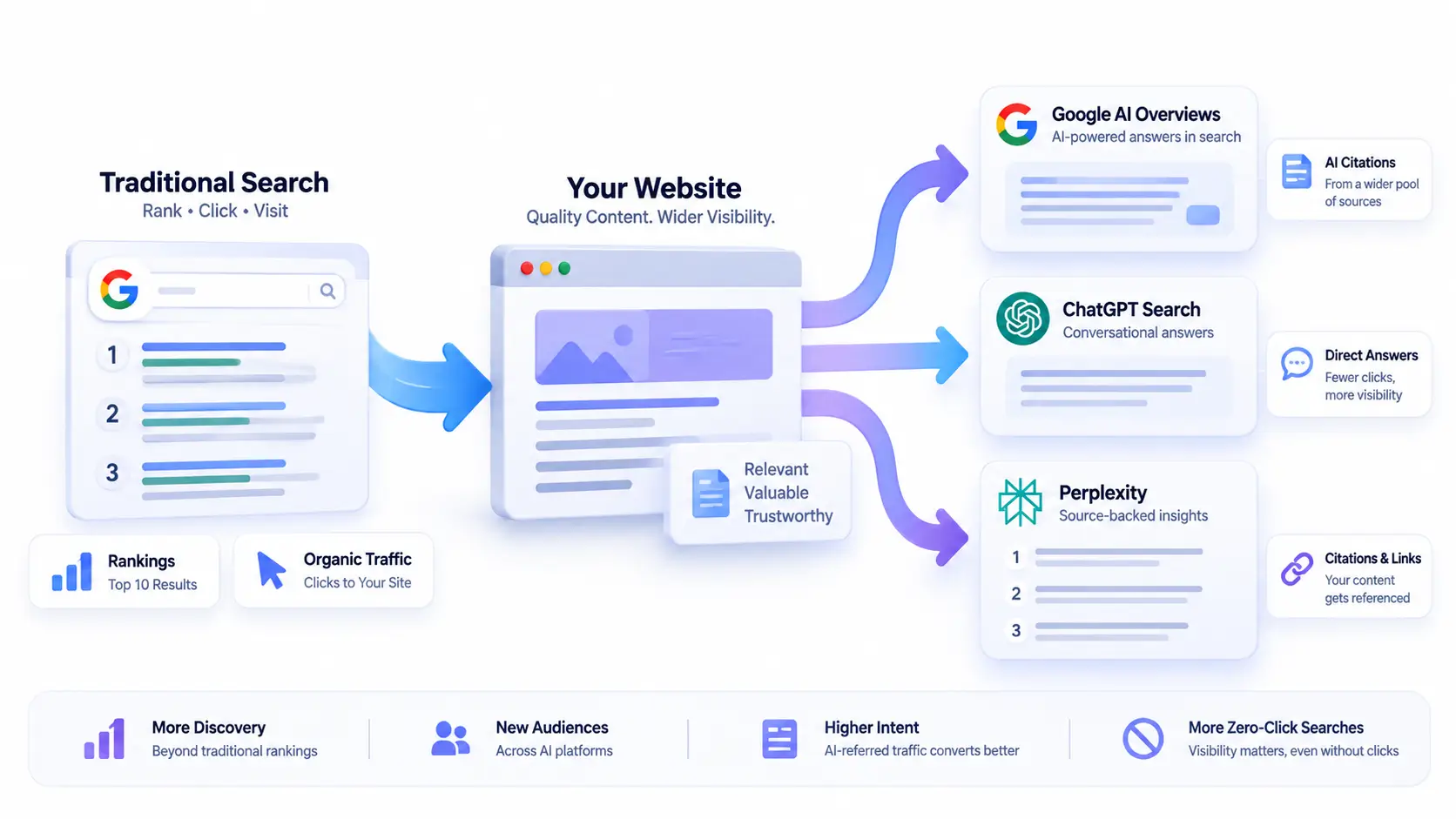
Three shifts define the current landscape. First, generative engines (Google AI Mode, AI Overviews, ChatGPT, Perplexity) now pull answers from a much wider pool of sources than the traditional top 10 one large-scale benchmark found that 83% of AI Overview citations come from pages that don’t even rank in Google’s organic top 10. Second, search intent modeling has moved from keyword matching to semantic and entity understanding. Third, the ROI conversation has changed: AI-referred traffic is converting at rates several times higher than traditional organic in early benchmarks, which means visibility inside AI answers is no longer a nice-to-have; it’s a growth channel in its own right.
Before diving into advanced SEO strategies, one caveat: none of this works if your fundamentals are broken. Crawlable internal links, indexable pages, and clear titles and headings are still the gate you have to pass through first. If your content exists mainly to manipulate rankings rather than serve a real query, or if your internal linking is inconsistent and orphaning pages, no amount of “advanced” tactics will compensate. Treat the list below as a second layer built on top of solid fundamentals, not a replacement for them.
Techniques 1–3: Technical SEO for AI-Era Crawling
- Optimize Core Web Vitals using real-user data, not lab scores. Lab tests (Lighthouse, PageSpeed) are useful for diagnostics, but Google increasingly weighs field data actual user experience across real devices and networks. Test on throttled connections and mid-range mobile hardware, not just fiber and flagship phones. Even small delays compound: a one-second load delay has been shown to meaningfully reduce conversion rates, which makes speed a ranking and revenue lever.
- Layer structured data beyond FAQ and HowTo schema. Most sites stop at the basic schema types. Advanced technical SEO means adding Organization, Author, and Product/Review entity markup that reinforces who is publishing the content and why they’re credible signals that both traditional search and generative engines use to establish trust.
- Audit crawl budget and log files on larger sites. If you’re managing hundreds or thousands of URLs, pull server log files and see what Googlebot is actually spending time on. Wasted crawl budget on thin, duplicate, or parameter-heavy URLs means your best content gets crawled less frequently, directly delaying how fast new or updated pages get picked up. Look specifically for faceted navigation, session IDs, and staging URLs leaking into the crawl path; these are the most common silent budget drains on mid-to-large sites
Techniques 4–6: Semantic Content Architecture
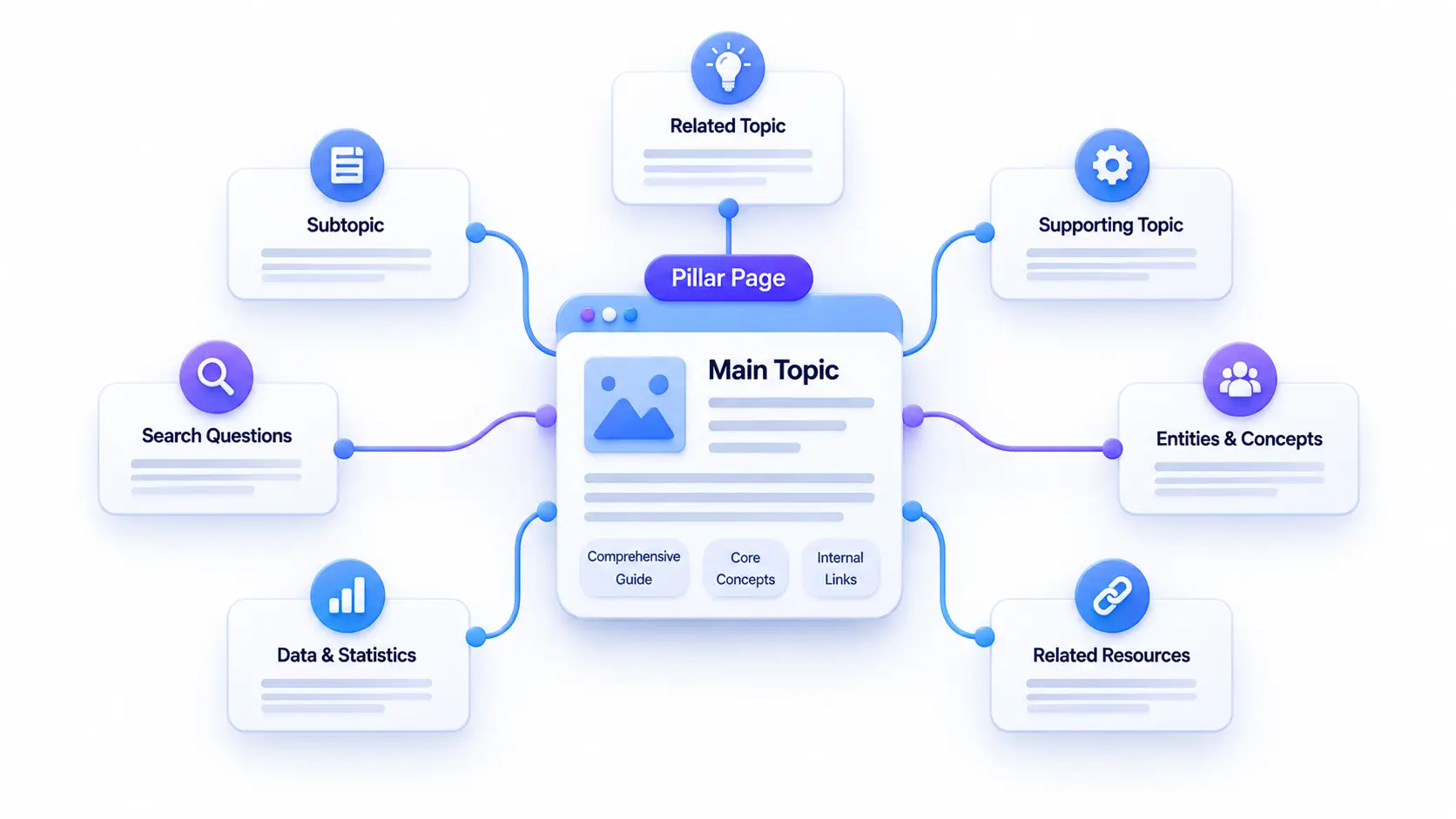
- Build topic clusters around pillar pages, not isolated posts. Instead of relying on isolated advanced SEO strategies and publishing standalone articles chasing individual keywords, group related subtopics around a comprehensive pillar page and interlink them deliberately. This builds topical density, a strong signal of expertise that isolated content can’t replicate.
- Do keyword research at the entity and concept level, not just exact-match. Modern ranking systems use NLP to understand what a page is about, not just what phrases appear on it. Tools that map related entities, concepts, and sub-questions around your target topic will surface content gaps that traditional keyword tools miss entirely.
- Prune and consolidate underperforming content. Thin, outdated, or overlapping pages dilute topical authority and can cause keyword cannibalization. Regularly audit your content library, merge weak pages into stronger ones, and redirect or remove what’s beyond saving. A quarterly cadence works well for most mid-sized sites, enough to catch decay early without turning pruning into a full-time job.
Techniques 7–9: Generative Engine Optimization (GEO)
This is the category of SEO strategies most 2026 “advanced SEO strategies” guides still treat as an afterthought which is exactly why it’s your biggest opportunity.
- Understand how AI Overviews and chat-based engines actually select sources. These systems don’t just re-rank your existing organic position. Research indicates barely any overlap between what ranks in Google’s top 10 and what ChatGPT chooses to cite, meaning GEO requires its own strategy, not a repurposed SEO checklist. This makes traditional advanced SEO strategies insufficient on their own.
- Structure content to be “extraction-ready.” Generative engines favor concise, direct answers positioned near question-style headers. Lead each section with a clear, standalone answer in the first sentence or two, then expand with supporting detail. This mirrors how featured snippets have worked for years, but it now matters for a much wider set of AI surfaces.
- Build third-party citation presence. Brand mentions on review platforms, community forums, and independent publications are cited by AI systems substantially more often than a company’s own site content. Treat digital PR, review management, and community engagement as GEO infrastructure, not just brand-building. Actively monitoring how your brand is portrayed across these third-party sources also matters: negative or outdated mentions can surface inside AI answers just as easily as positive ones, so review management doubles as reputation management for your AI visibility.
Techniques 10–11: E-E-A-T and Authority Signals
- Build a verifiable author entity, not just a byline. A strong E-E-A-T (Experience, Expertise, Authoritativeness, and Trustworthiness) foundation starts with linking author names to consistent bios, credentials, and a presence across the sites they contribute to. Both traditional ranking systems and generative engines use these signals to assess whether content comes from a real, qualified source.
- Publish original data as a citation magnet. Proprietary studies, surveys, or benchmarks are one of the few assets competitors genuinely cannot copy. Original statistics attract backlinks, get cited inside AI answers, and separate your content from the sea of recycled “best practices” posts covering the same topic.
Techniques 12–13: Modern Link Building and Internal Architecture
- Pursue “journalist keyword” style link acquisition. Instead of cold outreach for generic guest posts, create genuinely citable assets (data studies, tools, benchmarks) that journalists and writers search for directly when sourcing an article. This earns links passively and at scale, long after initial publication.
- Treat internal linking as a topical authority tool, not just a PageRank mechanism. Link between related pages using descriptive, keyword-relevant anchor text that reinforces the semantic relationship between pages this helps both crawlers and readers understand how your content clusters fit together.
How to Prioritize These Advanced SEO Strategies Based on Your Site’s Stage
- New sites: Focus on foundational advanced SEO strategies, including technical foundations (1–3) and topic cluster architecture (4–6) before chasing GEO or authority tactics; you need indexable, well-structured content first.
- Established sites with decent rankings: Prioritize GEO (7–9) and original data (11) you already have the visibility; now capture AI-driven traffic and citations.
- Enterprise/large sites: Crawl budget audits (3), content pruning (6), and internal linking architecture (13) deliver outsized returns given the scale of pages involved.
Measuring Success: Metrics That Matter in 2026
Rankings and organic traffic are no longer the full picture. Track:
- AI citation share: how often your pages are cited inside AI Overviews or chatbot answers for your target topics.
- Zero-click displacement rate: how much of your visibility is being absorbed by AI answers instead of clicks.
- Adjacent organic CTR lift: some data suggests being cited in an AI Overview can actually increase click-through on your other ranking pages nearby, a signal AI SEO worth tracking separately from standard CTR.
FAQ
What’s the difference between SEO and GEO in 2026?
SEO optimizes for ranking in traditional blue-link results using backlinks and on-page signals. GEO (generative engine optimization) optimizes for being cited inside AI-generated answers like Google AI Overviews or ChatGPT, which use different citation logic, often pulling from sources outside the organic top 10.
Do backlinks still matter for SEO in 2026?
Yes, but low-quality link chasing wastes time. Modern link building favors earned citations from original data, digital PR, and content worth referencing signals that build trust and authority rather than raw link volume.
How do you optimize content for AI Overviews?
Structure content with clear, direct answers near question-style headers, use structured data, and include original statistics. AI systems tend to extract concise, well-organized text content that reads like a direct answer is more likely to be pulled into a generative summary.
Is keyword stuffing still relevant?
No. Search engines now rely on semantic understanding and topic modeling to assess relevance, not exact-match keyword density. Focus on comprehensively covering a topic’s related concepts and entities.
What technical SEO factors matter most right now?
Core Web Vitals measured through real-user data, clean semantic HTML, mobile-first performance, and crawlability. These fundamentals determine whether advanced tactics can even take effect.
How do you measure the success of advanced SEO strategies beyond rankings?
Track which pages drive inquiries or conversions, monitor AI citation share and zero-click displacement, and assess technical friction points. Rankings and traffic alone no longer capture a page’s full business impact.


