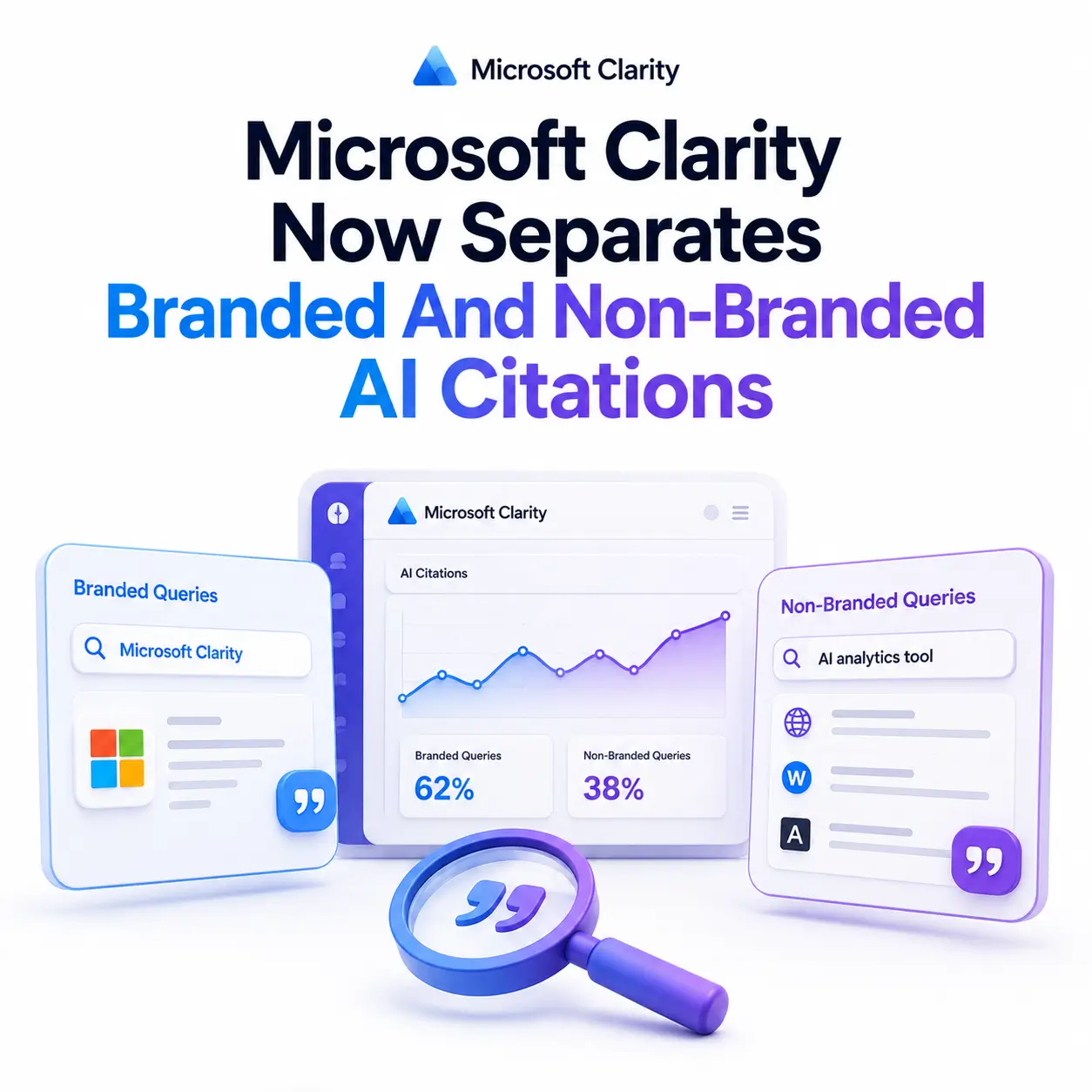
If you’ve been watching your Microsoft Clarity AI Citations dashboard climb over the past few months, you’ve probably asked yourself a version of the same question: are these citations happening because AI systems already know my brand, or because my content is genuinely useful enough to get pulled into an answer? Until now, Clarity couldn’t tell you. As of early August 2026, it can.
Microsoft has rolled out branded and non-branded query segmentation across the Clarity Citations dashboard, giving site owners a much sharper lens on where their AI visibility actually comes from. Here’s exactly what changed, why it matters, and how to put the new data to work.
What’s New in Microsoft Clarity’s AI Citations Dashboard
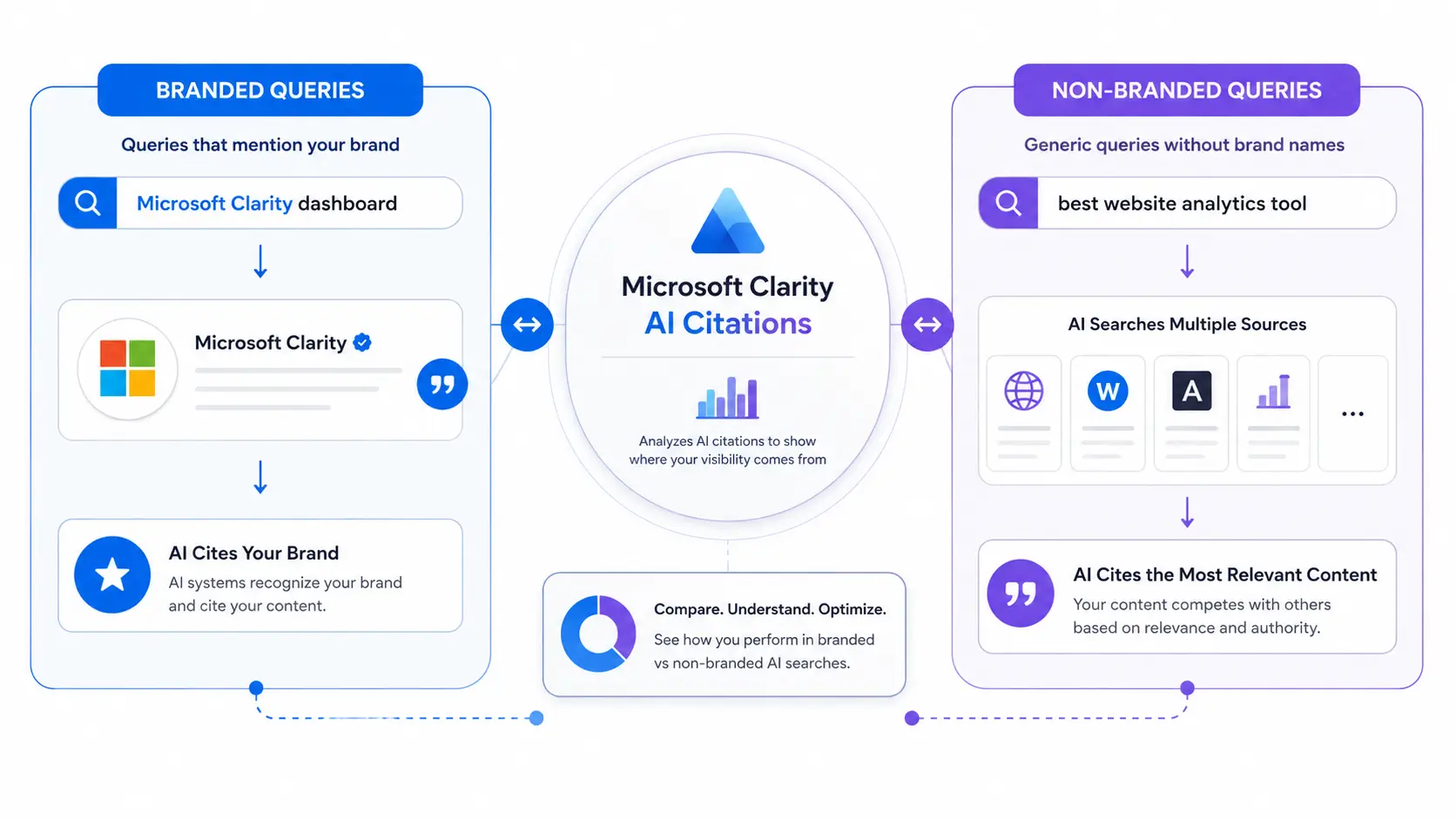
Microsoft Clarity now adds branded query segmentation to the AI Citations dashboard, letting you distinguish branded and non-branded grounding queries the searches AI systems run to find supporting information before generating a response. This isn’t a separate report; it’s layered directly onto the existing Citations experience you already use, live now in the AI Visibility dashboard.
Three specific additions make this possible:
Branded Labels in the Queries Card
Individual queries in the queries view are now clearly marked as branded, so at a glance you can see which queries mentioned your brand by name and which were generic, topic-based lookups.
Share of Authority Breakdown by Query Type
The Share of Authority card now splits results into branded and non-branded columns, showing you exactly where your authority is strongest in queries that name your brand, or in broader category queries where you’re competing on content alone.
New Branded and Non-Branded Filters
You can now filter the entire dashboard by branded or non-branded queries, making it easy to compare how your visibility performs when an AI system looks you up directly versus when it’s searching more broadly for an answer.
What Is a Grounding Query?
A grounding query is the search an AI system runs behind the scenes to find web content it can cite while composing an answer. It’s easy to assume this matches whatever the user actually typed into Copilot or Bing Chat, but that’s often not the case; the AI reformulates, narrows, or expands the original prompt into one or more grounding queries of its own. That distinction matters: a grounding query reveals what the AI searched for, not necessarily what the user asked, and it doesn’t by itself indicate purchase intent.
Why Branded vs. Non-Branded Segmentation Matters
This update solves a real interpretation problem. A brand with strong existing recognition will naturally rack up branded citations. AI systems cite you because they already know to look you up by name. That’s useful, but it tells you very little about whether your content is actually winning ground against competitors on the topics that matter.
The Risk of Reading Raw Citation Totals
Because brand strength inflates branded citation counts, a dashboard that only reports totals ends up rewarding brands for demand they generated somewhere else entirely through advertising, PR, word of mouth, or years of market presence. Without segmentation, it’s difficult to tell whether a spike in citations reflects new content success or simply people (and AI systems) already searching for you by name.
What Non-Branded Citations Reveal About Content Authority
Non-branded Share of Authority is the more diagnostically honest number. It shows how often AI cites your content instead of competing sources on relevant topics, isolating the work your content is doing that an AI system couldn’t have done without it. If you want to know whether your content genuinely earns visibility in category-level, generic searches, this is the figure to watch.
How Microsoft Defines Share of Authority
Microsoft calculates Share of Authority as the percentage of citations attributed to your domain compared with other cited domains for the same queries. There’s an important mechanical detail behind that number: Microsoft calculates it daily, and includes a query-day in the calculation only when your domain received a citation on that day. The comparison then covers citations from every domain cited within those included query-days.
In plain terms, Share of Authority tells you how much visibility you earned in the specific queries where your domain showed up it is not a measure of your overall share of the AI search market.
What This Update Does and Doesn’t Measure
Before you build a strategy around this data, it’s worth being clear-eyed about its scope.
Coverage: Which AI Experiences Clarity Tracks
The Citations dashboard reports on Microsoft AI surfaces primarily Copilot and Bing generative search, rather than across every AI platform. It does not directly capture citation activity from ChatGPT, Gemini, or Perplexity. Treat Clarity’s numbers as a useful, representative sample of your AI visibility, not a complete picture across every assistant your customers might use.
Citations vs. Traffic vs. Conversions
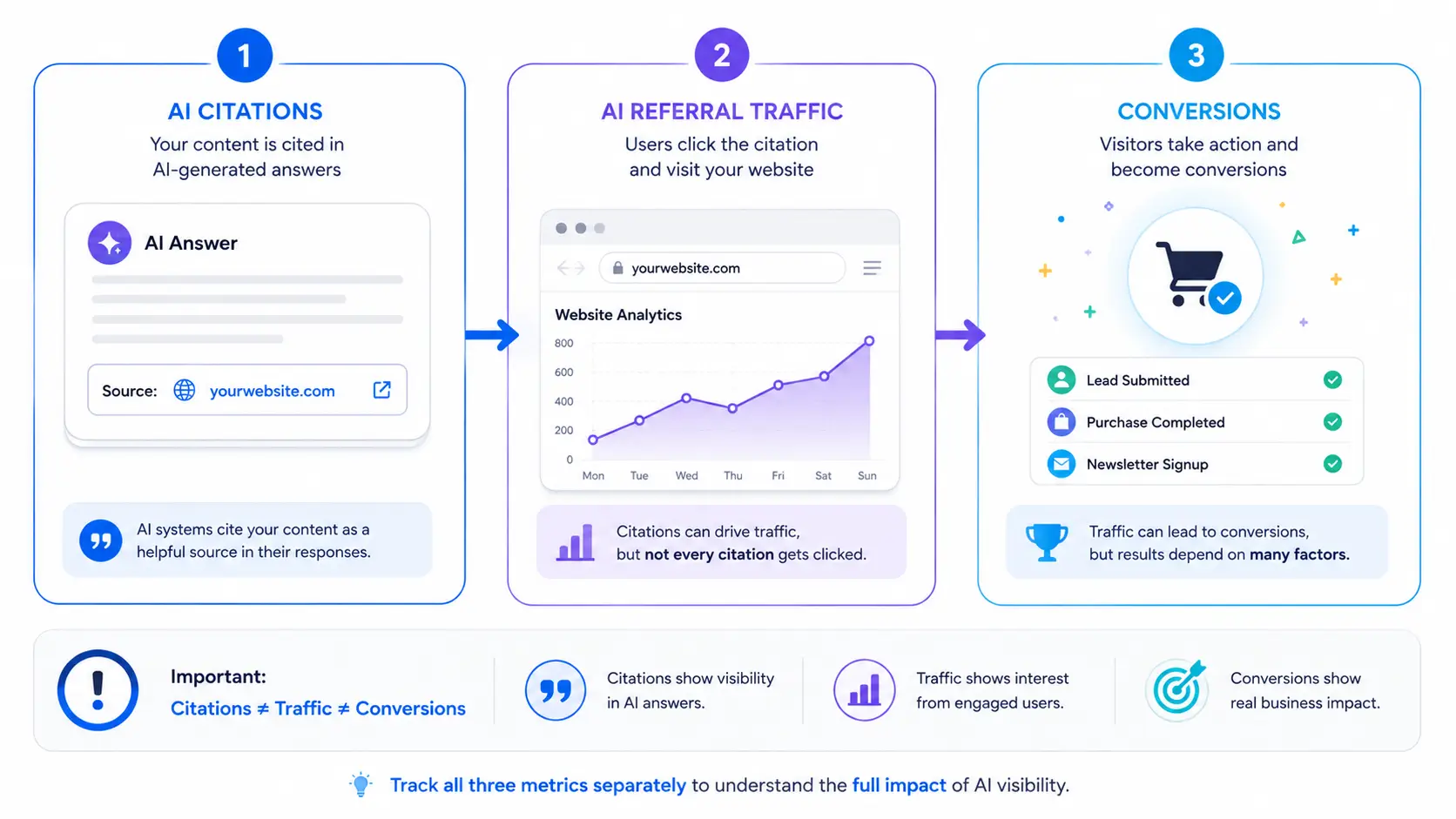
The dashboard tracks citation activity inside AI-generated answers that influence what happens before a user ever visits your site not traditional search rankings, impressions, or click-through rates. More citations don’t automatically translate into more website visits or revenue. Track citations, AI referral traffic, and conversions as three separate metrics, and resist the urge to treat a citation count as a proxy for business impact.
How to Set Up AI Citations Tracking in Clarity
Getting access to this data requires no new integration work if you’re already using Clarity. The Citations feature is free, with no traffic limits, and requires no CDN or server-side setup.
- Install the standard Microsoft Clarity tracking code on your site.
- Verify domain ownership as a project administrator, using the Clarity tracking code, Google Search Console, or Bing Webmaster Tools.
- Once verified, the branded and non-branded views appear automatically inside the existing AI Citations dashboard no extra configuration needed.
How to Use Branded and Non-Branded Data in Your SEO Strategy
This release is the third citation-focused update Microsoft has shipped to Clarity in roughly a month, following Topic Insights in July and Query Topics entering beta later that same month. Taken together, these releases read less like isolated feature drops and more like a deliberate roadmap toward making AI-visibility data genuinely actionable not just a bigger number to report on.
Auditing Your Non-Branded Share of Authority
Start by filtering your Citations dashboard to non-branded queries only. This shows you where buyers and researchers encounter your brand before they know your name arguably the more valuable signal for growth, since it reflects category-level discovery rather than existing brand equity.
Turning Grounding Queries Into a Content Roadmap
Review your top non-branded grounding queries and map them to the pages actually earning those citations. Where a relevant page is thin, outdated, or missing entirely, that’s a concrete content gap to prioritize. Make this a recurring exercise segmenting branded and non-branded queries monthly rather than a one-time audit, since AI citation patterns shift as models and content both evolve.
FAQ
What is Microsoft Clarity’s new branded and non-branded citations feature?
Microsoft Clarity now lets you filter AI Citations dashboard data by branded queries (mentioning your brand) versus non-branded queries (generic topic searches). This helps separate citations driven by existing brand awareness from those earned through genuine content discovery.
What is a grounding query?
A grounding query is a search an AI system runs behind the scenes to find supporting web content before generating an answer. It may differ from what the user actually typed, and it doesn’t necessarily indicate purchase intent.
What does Share of Authority mean in Microsoft Clarity?
Share of Authority is the percentage of citations attributed to your domain versus other cited domains, calculated daily across queries where your domain appeared at least once. It reflects visibility within those queries, not total AI search market share.
Is Microsoft Clarity’s AI Citations feature free to use?
Yes, Clarity and its Citations feature are free with no traffic limits. You just need to verify domain ownership using the Clarity tracking code, Google Search Console, or Bing Webmaster Tools.
Does Microsoft Clarity track citations from ChatGPT or Gemini?
No. Clarity’s Citations dashboard currently reports citation activity from Microsoft AI surfaces like Copilot and Bing generative search only, not from ChatGPT, Gemini, or Perplexity.
Do more AI citations mean more website traffic?
Not necessarily. Citations show how often AI systems reference your content, but that doesn’t automatically translate into site visits or conversions. Marketers should track citations, referral traffic, and conversions as separate metrics.
Key Takeaways
- Clarity now separates branded and non-branded grounding queries across labels, filters, and Share of Authority reporting.
- Non-branded Share of Authority is the more honest measure of content-driven AI visibility, since branded citations are inflated by existing brand awareness.
- The feature is free, covers Copilot and Bing generative search, and requires only standard domain verification to activate.
- Use it monthly: audit non-branded queries, map them to content gaps, and refresh the pages that aren’t earning citations yet.


