Running Facebook ads in 2026 is no longer about simply boosting posts or experimenting with random campaigns. It has evolved into a structured, data-driven system where clarity, consistency, and strategic thinking determine success.
With billions of active users across Facebook and Instagram, the platform continues to offer unmatched reach. However, the way ads perform has changed significantly. Automation, AI-driven delivery, and limited user-level tracking mean advertisers must shift their focus from manual control to building strong foundations.
From setting up a first campaign to shaping a strategy that delivers consistent, scalable results, Facebook advertising demands both clarity and direction. For small business owners, marketers, and growing brands, making sense of it all often comes down to understanding what truly works and applying it with confidence.
What Are Facebook Ads & Why They Matter in 2026
What Are Facebook Ads?
Facebook ads are paid promotions that allow businesses to showcase their products or services to a highly targeted audience. Unlike organic reach, which is unpredictable, paid ads give you control over visibility, audience selection, and performance tracking.
Key Benefits of Facebook Advertising for Businesses
- Massive Reach: Access billions of users across Facebook and Instagram
- Advanced Targeting: Reach audiences based on demographics, interests, and behaviors
- Cost Control: Set flexible daily or lifetime budgets
- Real-Time Insights: Monitor and adjust campaigns instantly
- Cross-Platform Integration: Run ads seamlessly across multiple Meta platforms
In a competitive digital environment, Facebook ads remain one of the most effective tools for generating awareness, leads, and sales.
Major Changes in Facebook Ads in 2026 You Must Know
The Facebook advertising ecosystem has undergone major transformations in recent years. Understanding these changes is essential before launching campaigns.
AI-Driven Ad Delivery System
Meta’s algorithm now plays a dominant role in deciding who sees your ads. Instead of relying heavily on manual targeting, the system uses machine learning to identify high-potential audiences.
Reduced Manual Targeting Control
Traditional tactics like detailed interest stacking and micro-targeting have lost effectiveness. Broader inputs now allow the algorithm to optimize performance more efficiently.
Privacy Updates & Data Limitations
With tracking restrictions and reduced cookie reliability:
- User-level data is less accurate
- Attribution is often delayed
- First-party data has become critical
Why Creative Strategy Matters More Than Ever
Success increasingly depends on:
- Strong visuals
- Clear messaging
- Consistent creative testing
In short, Facebook ads now reward structure, patience, and quality inputs rather than shortcuts.
Step-by-Step Guide to Running Facebook Ads in 2026
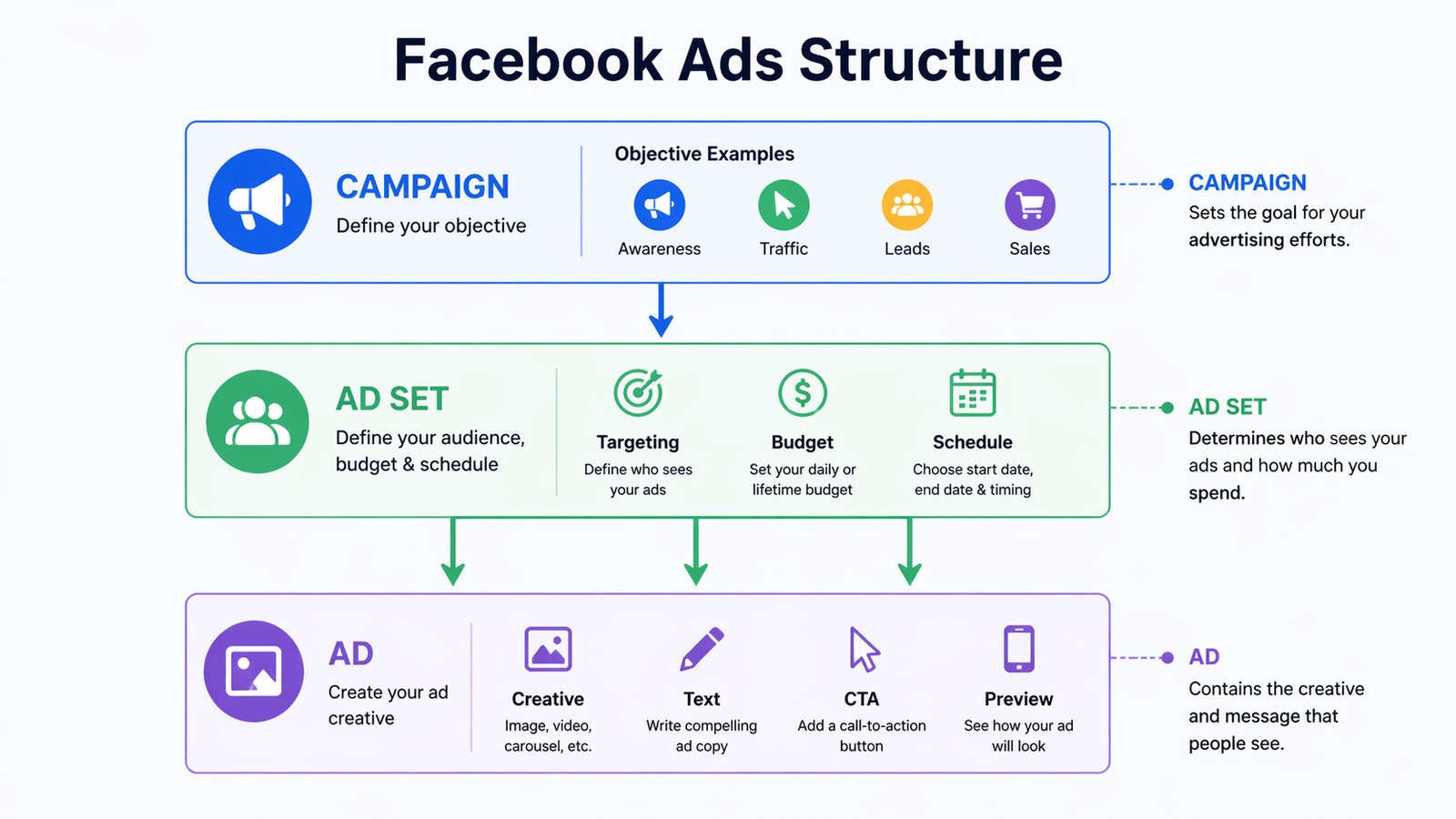
Set Up Meta Ads Manager Account
To get started, you need:
- A Facebook business page
- Access to Ads Manager
- A verified payment method
Ads Manager is your central hub for creating, managing, and analyzing campaigns.
Choose the Right Campaign Objective
Your campaign objective should reflect your business goal. Common objectives include:
- Awareness: Increase brand visibility
- Traffic: Drive visitors to your website
- Engagement: Boost interactions and content visibility
- Leads: Capture user information
- Sales: Generate conversions
Choosing the wrong objective can lead to poor optimization and wasted budget.
Define Your Target Audience
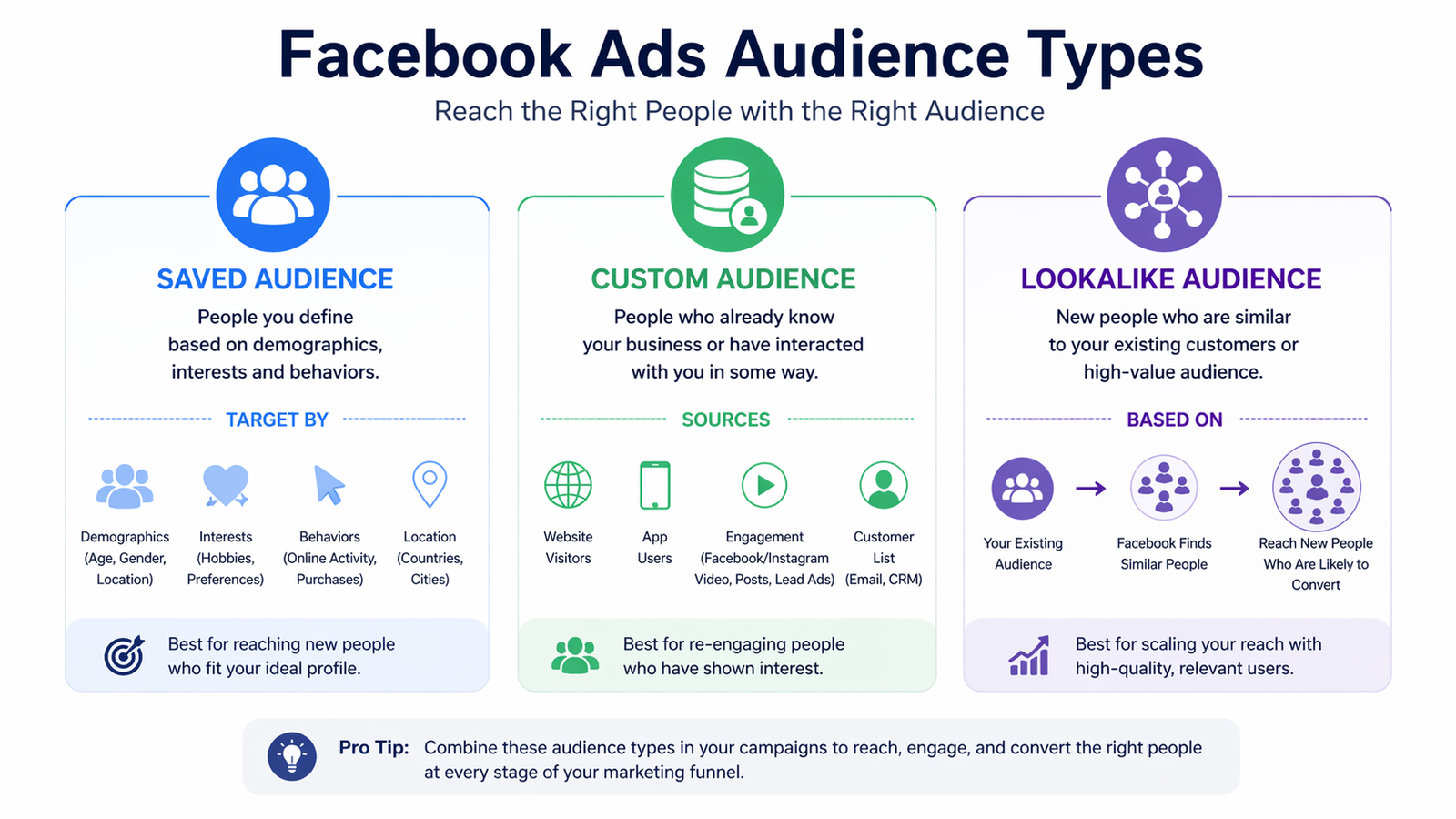
Facebook allows multiple audience types:
1. Saved Audiences
Based on demographics such as:
- Age
- Location
- Language
People who already interacted with your brand:
- Website visitors
- Customer lists
- Social media engagement
3.Lookalike Audiences
New users who resemble your existing customers
In 2026, broader targeting combined with strong data signals often outperforms overly narrow audiences.
Set Budget and Schedule
You can control spending through:
- Daily Budget: Fixed daily spend
- Lifetime Budget: Total spend over a campaign duration
Additional options include:
- Ad scheduling based on peak activity times
- Automated budget allocation using AI
Consistency in budget allocation helps the system learn and optimize effectively.
Choose Ad Placements (Automatic vs Manual)
You can either:
- Use automatic placements (recommended for beginners)
- Select manual placements such as:
- Feeds
- Stories
- Reels
- In-stream videos
Automatic placements generally deliver better results due to algorithm optimization.
Create High-Converting Facebook Ads
Your ad should include:
- Visual Content: Images or videos
- Ad Copy: Clear and engaging messaging
- Call-to-Action (CTA): Direct next step (e.g., “Learn More,” “Buy Now”)
Popular Ad Formats
- Single image or video
- Carousel ads
- Collection ads
Focus on clarity rather than complexity—simple, direct messaging often performs best.
Monitor and Optimize Campaign Performance
Track key metrics such as:
- Click-through rate (CTR)
- Cost per click (CPC)
- Conversion rate
- Return on ad spend (ROAS)
Avoid making frequent changes too early. Allow campaigns time to stabilize before optimizing.
Facebook Ads Strategy in 2026: How to Get Consistent Results
Facebook Ads Strategy in 2026: How to Get Consistent Results
Define Clear Campaign Goals
Every campaign should answer:
- What outcome matters most?
- How will success be measured?
Examples:
- 100 leads per month
- Increase website sales by 20%
- Boost brand awareness in a new market
Clarity at this stage prevents wasted spend later.
Build a Full-Funnel Strategy (TOF, MOF, BOF)
Top of Funnel (TOF)
- Focus: Awareness and discovery
- Strategy:
- Use broad targeting
- Test multiple creatives
- Prioritize engagement
Middle of Funnel (MOF)
- Focus: Consideration and trust
- Strategy:
- Address objections
- Share value-driven content
- Retarget engaged users
Bottom of Funnel (BOF)
- Focus: Conversions
- Strategy:
- Use purchase-focused campaigns
- Highlight offers, testimonials, and guarantees
- Target warm audiences
Use First-Party Data for Better Targeting
Important Data Sources
- Website events (via tracking tools)
- Customer databases
- CRM systems
High-quality data improves targeting accuracy and campaign performance.
Create a Strong Ad Creative Strategy
Best Practices
- Use short-form videos for engagement
- Test multiple variations regularly
- Keep messaging clear and relatable
- Avoid overly complex or “salesy” language
Effective Creative Elements
- Strong opening hook
- Problem-solution structure
- Social proof
- Clear CTA
Consistency in creative testing leads to long-term growth.
Smart Budgeting and Scaling Techniques
Scaling Methods
- Vertical Scaling: Increase budget on high-performing campaigns
- Horizontal Scaling: Introduce new creatives or audiences
Avoid aggressive budget increases, as they can disrupt performance.
Advanced Facebook Ads Tips to Maximize ROI
Use A/B Testing to Improve Results
Test different:
- Headlines
- Visuals
- Audiences
This helps identify what works best.
Make Data-Driven Decisions
Let performance data guide decisions rather than intuition.
Understand the Learning Phase
Campaigns need time to gather data. Avoid stopping them prematurely.
Optimize Based on Trends, Not Daily Changes
Focus on long-term patterns instead of short-term fluctuations.
Common Facebook Ads Mistakes Beginners Must Avoid
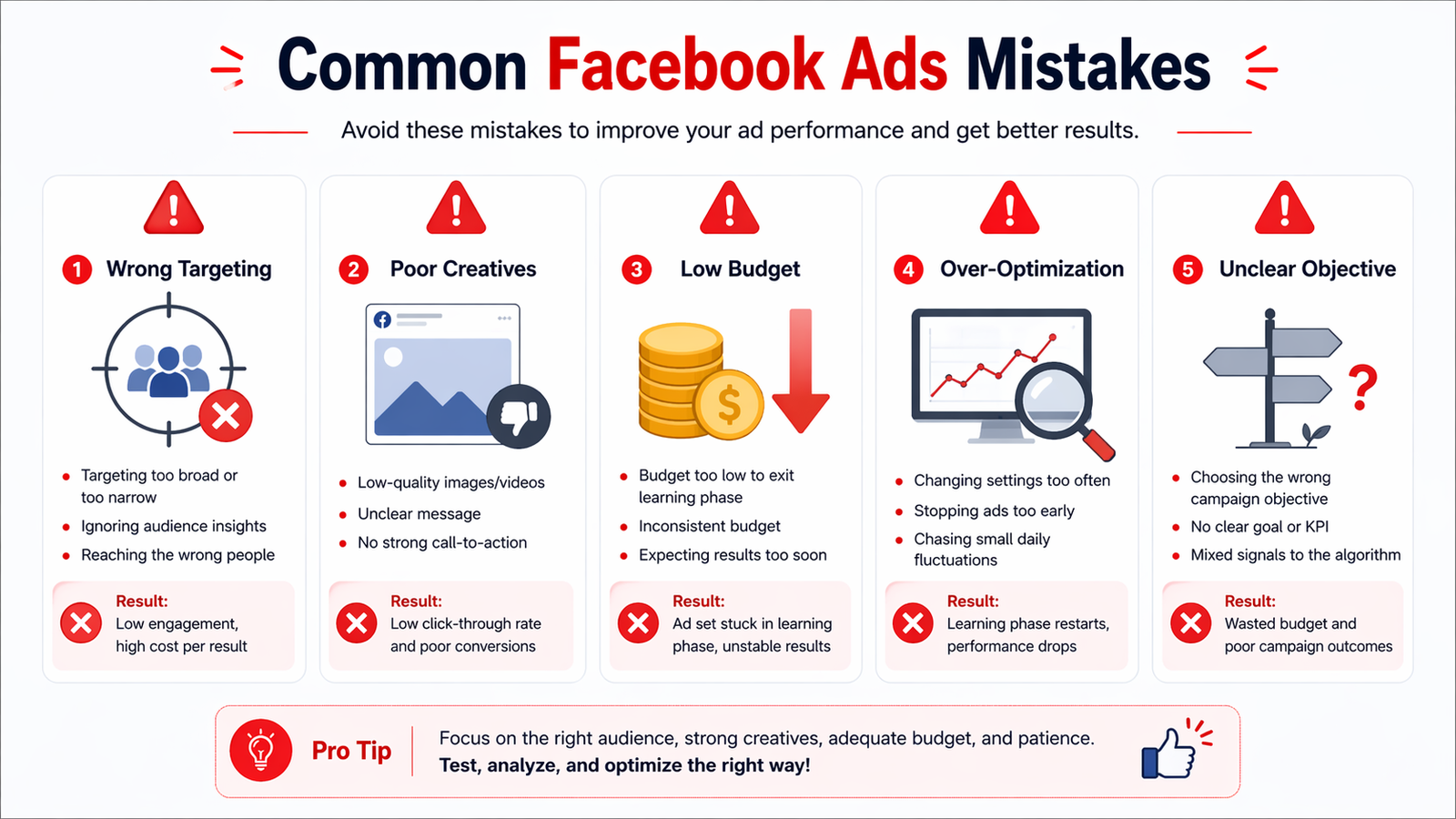
- Over-optimizing too early
- Using overly narrow targeting
- Ignoring creative quality
- Setting unclear objectives
- Scaling too quickly
- Relying only on one type of campaign
Facebook Ads Strategies for Different Business Types
Facebook Ads for E-commerce Businesses
- Focus on conversions and repeat purchases
- Use dynamic product ads
- Maintain a strong creative pipeline
Facebook Ads for Service-Based Businesses
- Prioritize lead quality over volume
- Use educational and trust-building content
- Align ads with follow-up systems
Facebook Ads Strategy for Startups
- Start with awareness and testing
- Focus on learning before scaling
- Manage budgets carefully
Conclusion: Building a Scalable Facebook Ads System in 2026
Facebook advertising in 2026 is no longer about quick wins or random experiments. Success comes from building a structured system backed by clear goals, strong creatives, and consistent optimization. As automation and AI continue to shape ad performance, marketers must focus on strategy, data, and long-term thinking rather than shortcuts.
Whether you are a business owner, freelancer, or aspiring marketer, mastering Facebook Ads requires continuous learning and practical experience. Developing the right skills can make a significant difference in achieving consistent and scalable results.
If you’re looking to build expertise and grow your career in this field, enrolling in a Digital Marketing Course in Kerala can help you gain hands-on knowledge in Facebook Ads, SEO, and performance marketing. With the right training and approach, you can create high-performing campaigns and stay ahead in the evolving digital landscape.
In the end, success in Facebook advertising is not about chasing trends it’s about building a reliable system that delivers results consistently over time.


