 Skip to content
Search engine optimization has evolved significantly over the past few years. In 2026, ranking on Google is no longer just about adding keywords or building backlinks. Successful SEO now depends on technical performance, content quality, user experience, and the ability to adapt to AI-driven search results.
One of the most effective ways to maintain strong search visibility is through regular SEO audits. An SEO audit helps identify technical issues, content gaps, and optimization opportunities that may be affecting your website’s performance in search engines.
By conducting a structured SEO audit, businesses can detect problems early, improve their website’s overall health, and ensure their pages remain competitive in search rankings.
This guide outlines the Ultimate SEO Audit Checklist for 2026, explaining the key areas every website should evaluate to improve organic visibility and long-term SEO performance.
What Is an SEO Audit?
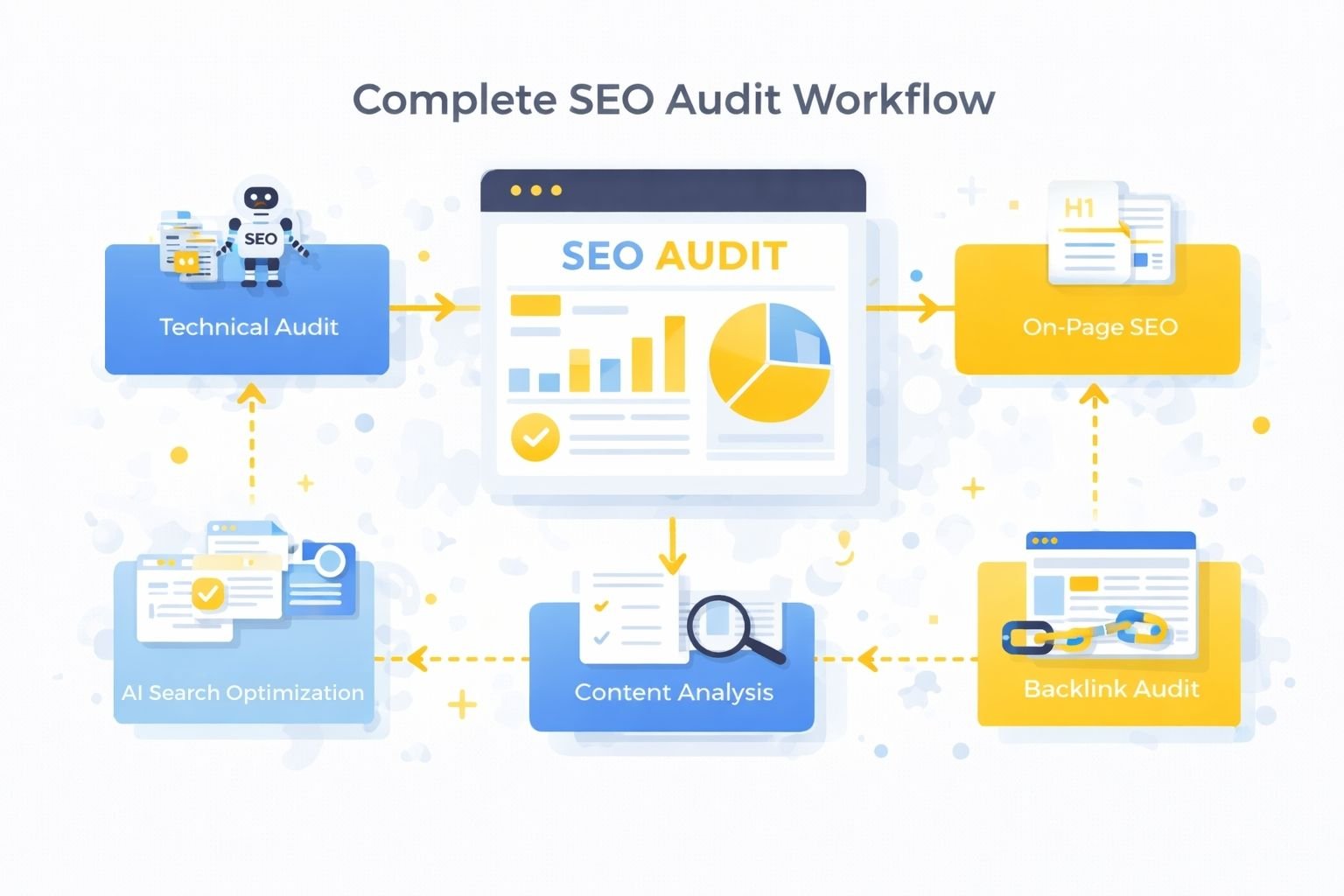
An SEO audit is a detailed evaluation of a website’s ability to rank in search engines. It analyzes various elements such as technical SEO, on-page optimization, content quality, backlinks, and user experience to determine whether a website follows modern search engine guidelines.
The purpose of an SEO audit is to identify weaknesses that may prevent a website from ranking effectively. These issues could include technical errors, poorly optimized pages, duplicate content, slow loading speeds, or weak backlink profiles.
A well-executed SEO audit provides valuable insights that help businesses refine their SEO strategy, improve website performance, and align their website with Google’s constantly evolving algorithms.
Technical SEO Audit
Technical SEO forms the foundation of search engine optimization. Even the most valuable content will struggle to rank if search engines cannot properly crawl, index, or understand your website.
One of the first steps in a technical SEO audit is verifying whether your website’s pages are properly indexed in search engines. Tools such as Google Search Console can help identify pages that are indexed, excluded, or blocked by robots.txt rules or noindex tags. Addressing these indexing issues ensures that search engines can discover and display your content in search results.
Another important aspect of technical auditing is crawling the website using professional SEO tools such as Screaming Frog, Ahrefs, or Semrush. These tools help detect issues such as broken links, redirect chains, duplicate pages, missing meta tags, and incorrect canonical tags. Identifying and resolving these issues improves the overall crawlability of your website.
Website speed is another critical factor that must be evaluated during an SEO audit. Google prioritizes websites that provide fast and smooth user experiences. Core Web Vitals metrics such as Largest Contentful Paint (LCP), Interaction to Next Paint (INP), and Cumulative Layout Shift (CLS) play an important role in measuring site performance. Improving these metrics by optimizing images, reducing unnecessary scripts, and improving server response time can significantly enhance both user experience and search rankings.
Mobile optimization is equally essential because Google now uses mobile-first indexing. This means that Google primarily evaluates the mobile version of a website when determining rankings. Ensuring that your website is responsive, loads quickly on mobile devices, and offers a smooth navigation experience is crucial for maintaining strong search performance.
Structured data is another important technical component that should be reviewed during an SEO audit. Implementing schema markup helps search engines better understand your content and increases the chances of appearing in rich search results. Common schema types include article schema, FAQ schema, product schema, breadcrumb schema, and local business schema.
On-Page SEO Audit
On-page SEO focuses on optimizing individual pages so they can rank for relevant search queries. During an audit, it is important to examine whether each page follows proper optimization practices.
Title tags should be reviewed to ensure they are unique, relevant, and optimized for target keywords. Ideally, title tags should remain within the recommended character limit and clearly describe the page content. Duplicate or missing title tags can reduce the effectiveness of on-page optimization and should be corrected.
Meta descriptions should also be evaluated to ensure that every page contains a compelling description that encourages users to click on the search result. While meta descriptions do not directly influence rankings, they play an important role in improving click-through rates from search results.
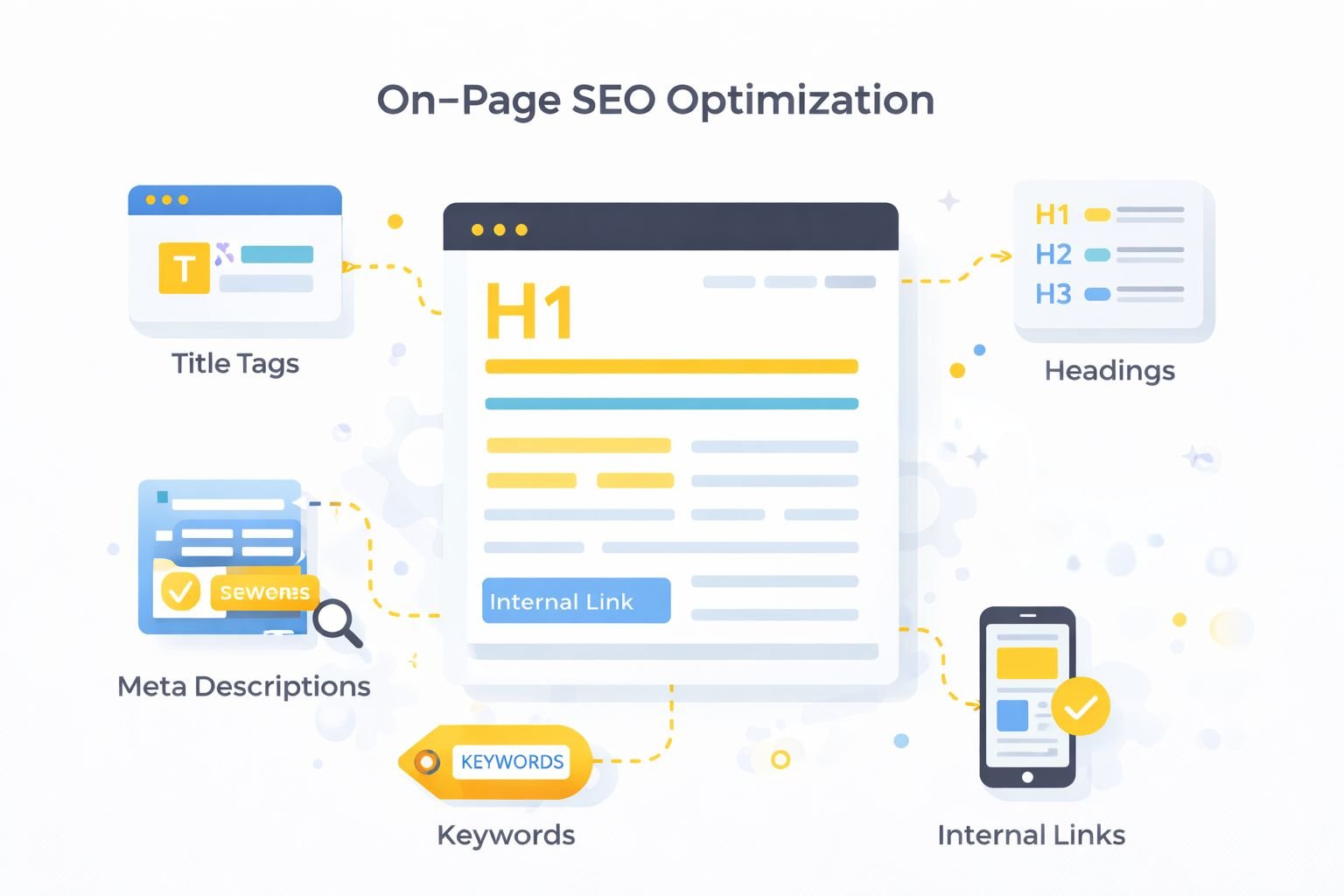
The structure of headings on each page should be examined as well. A well-structured page typically includes a single H1 heading that clearly defines the main topic, followed by H2 and H3 headings that organize the supporting sections of the content. This hierarchy helps search engines understand the context of the page and improves readability for users.
Keyword optimization should also be assessed to ensure that content targets relevant search queries. Instead of repeating keywords excessively, modern SEO focuses on semantic relevance. This means using related terms, synonyms, and contextual phrases that help search engines better understand the topic.
Internal linking is another important element of on-page SEO. A well-planned internal linking structure helps search engines discover important pages on your website and distributes authority across different sections of your site. During an audit, it is important to identify orphan pages, broken internal links, and opportunities to strengthen connections between related content.
Content SEO Audit
Content plays a central role in search engine rankings, making it essential to evaluate the quality and relevance of the content on your website.
An effective content audit involves reviewing whether each page provides useful, accurate, and comprehensive information that satisfies user intent. Search engines prioritize content that demonstrates (E-E-A-T) expertise, experience, authority and trustworthiness particularly for topics that influence important decisions.
Another critical aspect of content auditing is identifying duplicate or overlapping content. When multiple pages target the same keywords or contain similar information, search engines may struggle to determine which page should rank. Consolidating or restructuring such pages helps strengthen the overall authority of the content.
Content freshness is another factor that should be considered. Updating existing articles with new information, recent statistics, improved explanations, or expanded sections can significantly improve rankings. Regular updates signal to search engines that the content remains relevant and valuable to users.
Backlink Profile Audit
Backlinks remain one of the most influential ranking factors in search engine optimization. A backlink audit helps evaluate the strength and reliability of the websites linking to your domain.
During the audit, it is important to analyze whether backlinks come from relevant and authoritative websites within your industry. High-quality backlinks from trusted sources can significantly improve a website’s credibility and ranking potential.
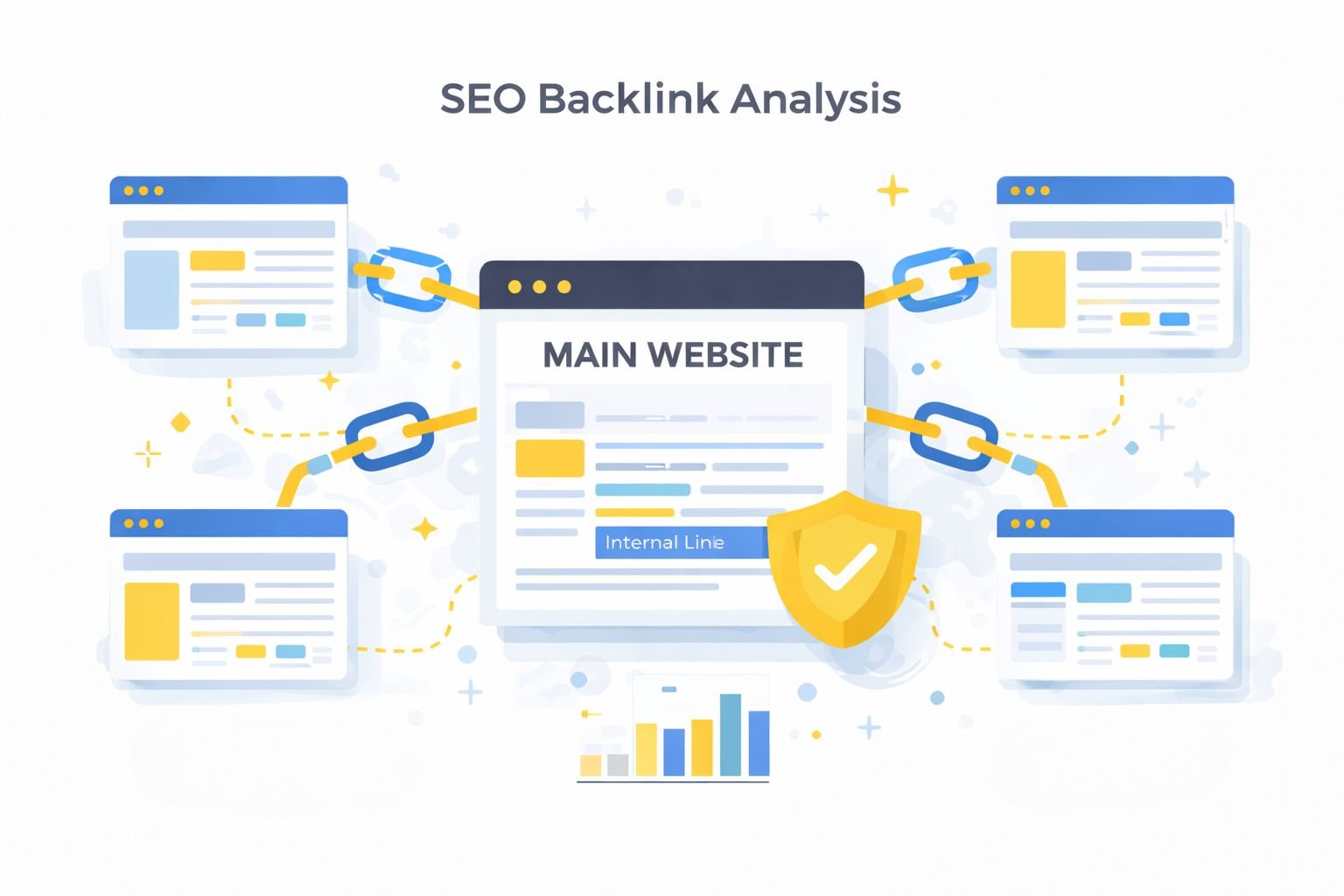
At the same time, it is important to identify harmful or spammy links that may negatively impact SEO performance. Links originating from low-quality domains, link farms, or unrelated websites may signal manipulation to search engines. If such links are detected, website owners can submit a disavow file to prevent these links from affecting rankings.
Competitor backlink analysis is another valuable step in the auditing process. By studying the backlink profiles of competitors who rank well in search results, businesses can discover new opportunities for partnerships, digital PR, and content collaborations that generate authoritative backlinks.
Local SEO Audit
For businesses that rely on local customers, local SEO plays an essential role in driving visibility and traffic.
A local SEO audit should begin with evaluating the Google Business Profile. Ensuring that the business name, address, phone number, business categories, and contact details are accurate and consistent is critical for local search performance. Businesses should also maintain updated photos, respond to customer reviews, and regularly post updates to strengthen their local presence.
Consistency of business information across local directories and listing platforms is equally important. When search engines find consistent name, address, and phone number information across multiple platforms, it increases trust and improves the likelihood of appearing in local search results.
AI Search Optimization Audit
As AI-powered search continues to evolve, SEO strategies must also adapt to new search behaviors and technologies. Modern SEO audits should therefore include an evaluation of how well content is optimized for AI-driven search systems.
Websites that organize content clearly, use structured data, and provide authoritative information are more likely to appear in AI-generated search responses. Building strong topical authority and covering subjects comprehensively helps search engines recognize a website as a reliable source of information.
Adding FAQ sections, improving content structure, and strengthening entity-based content signals can improve a website’s visibility in emerging AI search experiences.
How Often Should You Conduct an SEO Audit?
SEO audits should not be treated as a one-time activity. Search engines frequently update their algorithms, and websites undergo constant changes through content updates, design modifications, and new technologies.
For most businesses, it is recommended to review SEO performance regularly throughout the year. Monthly reviews can help monitor performance trends, while more detailed audits should be conducted quarterly to identify technical and content-related issues. A comprehensive audit at the end of the year allows businesses to evaluate overall performance and plan improvements for the next phase of their SEO strategy.
Final Thoughts
SEO success in 2026 depends on maintaining a strong technical foundation, producing high-quality content, and adapting to evolving search technologies. Conducting regular SEO audits helps identify hidden issues, uncover optimization opportunities, and ensure that a
website remains competitive in search results.
By following a structured SEO audit process, businesses can strengthen their website’s performance, improve search visibility, and build a sustainable strategy for long-term organic growth.
Learn SEO and Digital Marketing
If you want to master practical SEO strategies, website audits, and modern digital marketing techniques, joining a professional Digital Marketing Course in Thrissur can help you gain real-world skills and hands-on experience with industry tools.
Learning how to perform effective SEO audits, analyze website performance, and implement optimization strategies can open the door to a successful career in digital marketing.


