 Skip to content
When Google Ads clicks fall abruptly, it usually points to a change in visibility, competition, or relevance. Not because clicks are merely a surface-level metric, but because they are closely tied to future conversions. Most websites convert only a small percentage of visitors, so when traffic declines, potential revenue declines with it. At the same time, competitors gain additional exposure.
The good news is that click loss rarely happens without a reason. In most cases, performance drops can be traced to a small number of measurable changes inside the account.
Instead of reacting impulsively, advertisers should diagnose the issue methodically
- Did ad eligibility decrease due to Quality Score?
- Did impressions shrink and reduce reach?
- Did recent changes reset performance?
- Did competition intensify?
This article explains these four common causes and how to fix them efficiently.
What Is CTR in Google Ads & Why It Matters for Clicks
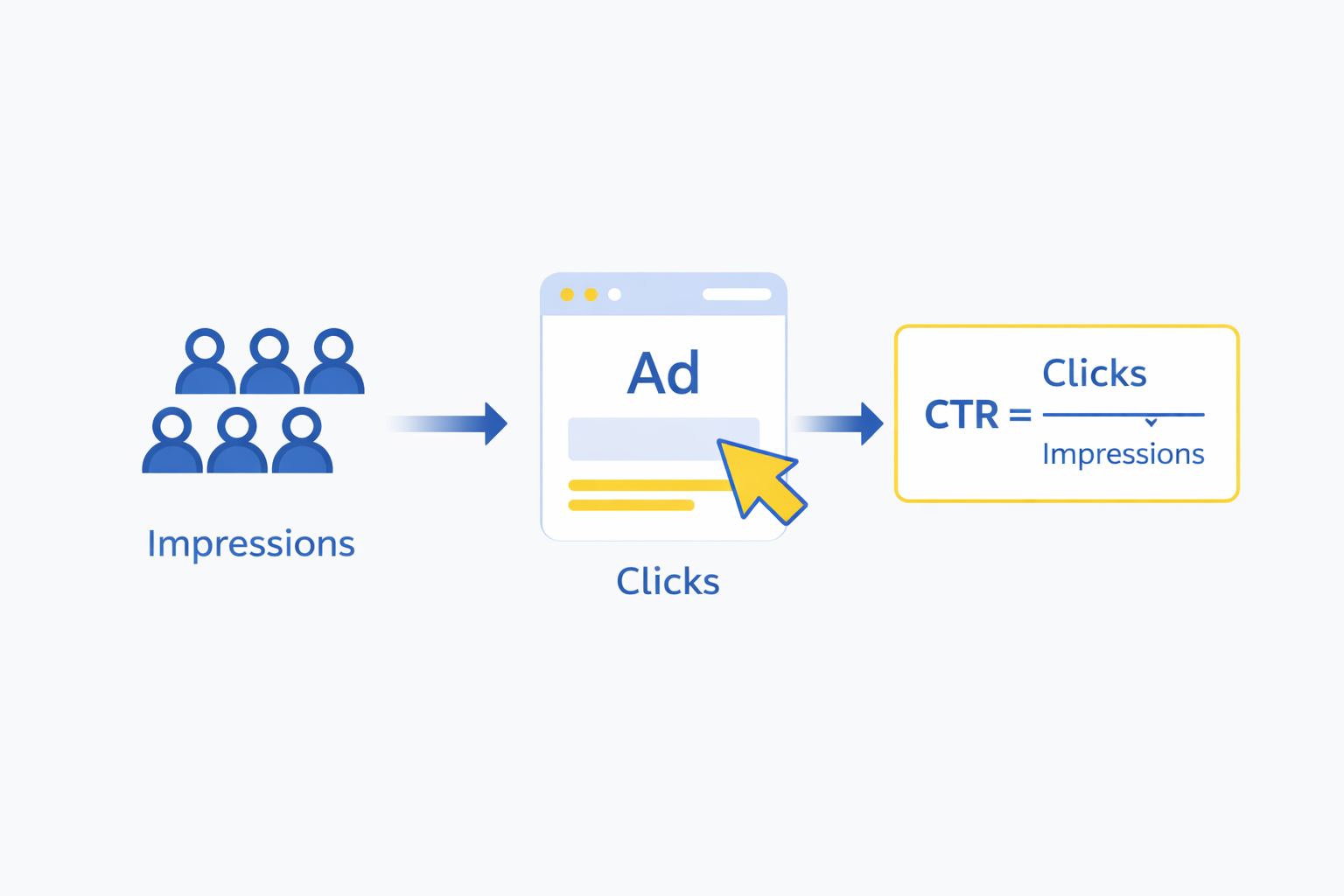
Click-through rate (CTR) is calculated by dividing clicks by impressions.
CTR = Clicks ÷ Impressions
Although the formula is simple, CTR remains one of the most valuable metrics in paid advertising. It reveals much more than whether ad copy is attractive.
CTR helps advertisers:
- Evaluate ad relevance and quality
- Understand keyword competitiveness
- Identify gaps between bids and budget strategy
- Diagnose declining traffic early
When CTR declines, click volume usually follows. But even if CTR remains stable, a drop in impressions will still reduce clicks. Therefore, CTR should always be analyzed alongside reach and eligibility.
Across industries, search ads often average mid-single-digit CTR levels. If performance falls significantly below expectations, investigation is necessary rather than immediate budget increases.
Why Google Ads Clicks Are Dropping
Below are the four most frequent causes of declining clicks and the actions required to stabilize performance.
1. Quality Score Decrease Reduces Google Ads Clicks
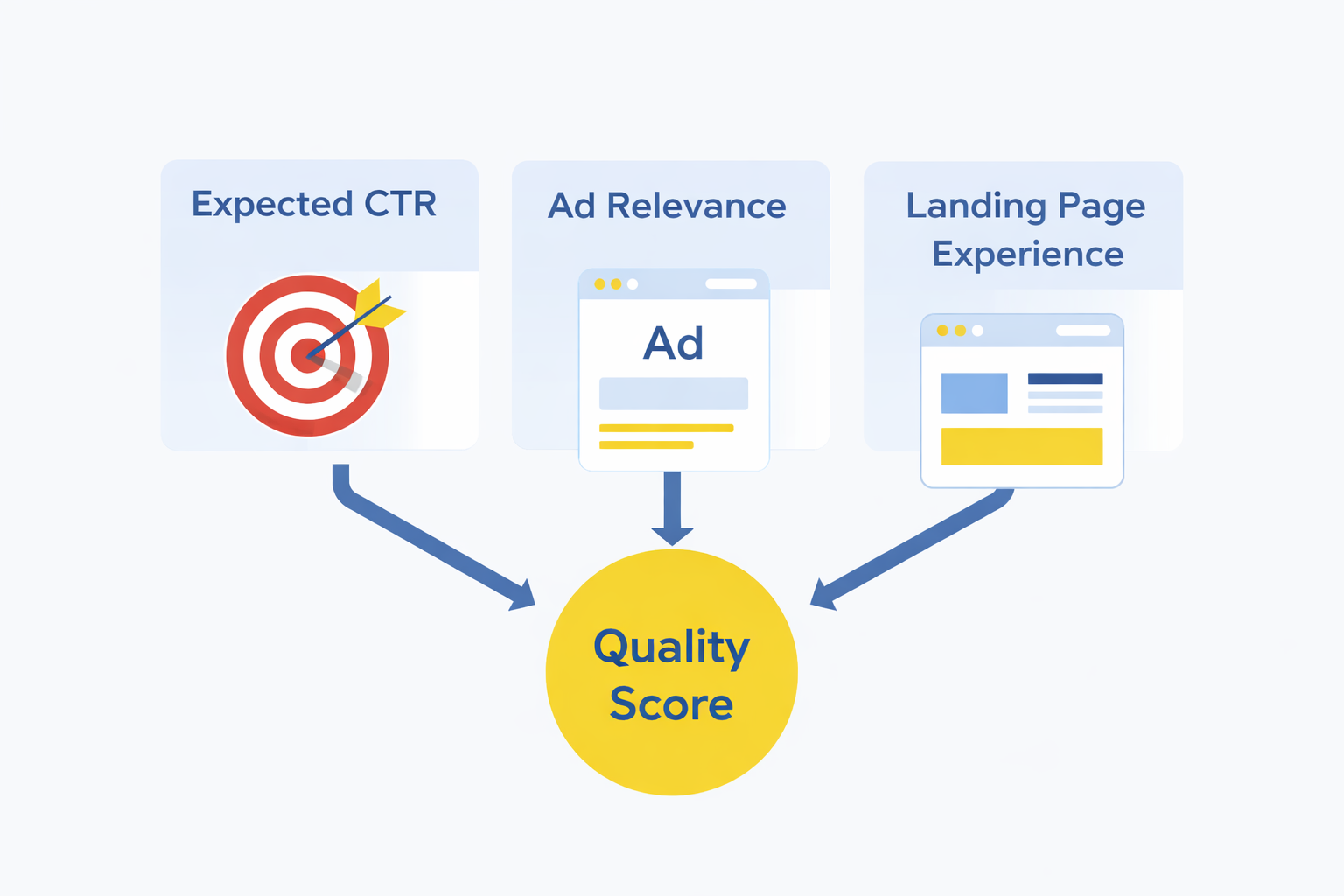
Quality Score is often underestimated, yet it strongly affects whether ads appear and how much they cost. A lower score reduces ad eligibility and increases cost-per-click, resulting in fewer clicks.
Quality Score evaluates three main components:
- Expected CTR
- Ad relevance
- Landing page relevance
Google Ads provides feedback on each factor, making optimization measurable rather than guesswork.
How To Fix It
Focus on improving the weakest component first.
Typical improvements include:
- Align keywords more closely with ad messaging
- Write clearer, intent-matching ad copy
- Improve landing page speed and relevance
- Ensure landing pages answer the exact search query
Some improvements, such as rewriting ads, can be implemented quickly. Others, like redesigning landing pages, require more effort but have a stronger long-term impact.
Improving Quality Score increases visibility before increasing spend, which makes it the first place to investigate.
2. Declining Impressions Cause Fewer Clicks
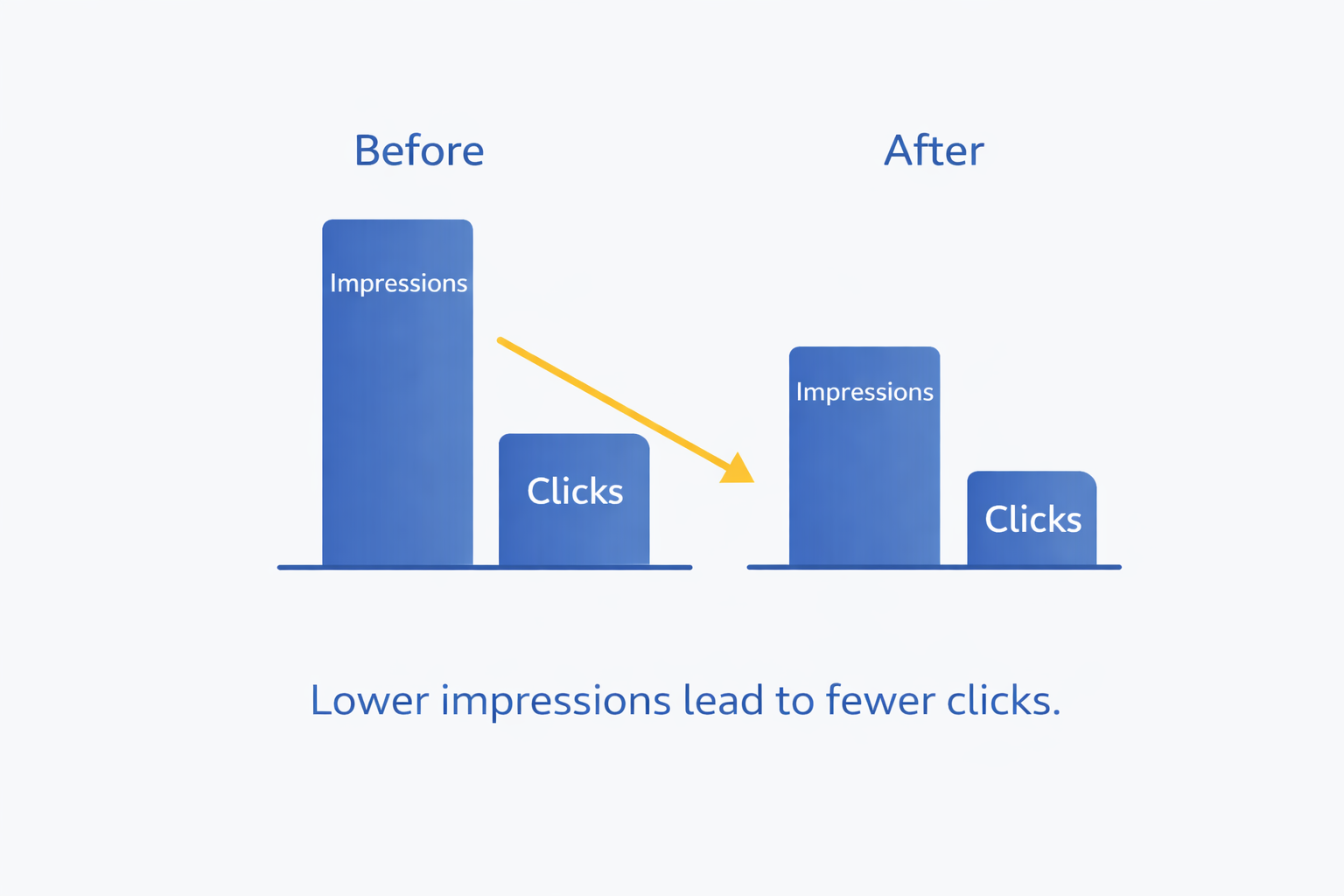
If CTR remains stable but clicks drop, the problem is almost always reduced impressions. Fewer people are seeing the ads.
There are several common causes.
Seasonality
Demand naturally fluctuates. If fewer people search for a product or service, impressions decrease regardless of ad quality.
Bidding Strategy Misalignment
Changing bidding strategies can unintentionally restrict reach.
For example:
Setting a target CPA that is unrealistically low signals the system to avoid auctions unlikely to meet the goal. As a result, impressions shrink rapidly.
Automated bidding prioritizes conversion probability, not visibility. When targets are too strict, reach is reduced.
Negative Keyword Conflicts
As match types become broader, advertisers often add more negative keywords. Over-filtering can block relevant searches and silently eliminate impressions.
How To Fix It
- Review bidding targets and align them with actual performance history
- Confirm budgets support competition levels
- Audit negative keywords for conflicts
- Compare search volume trends before making major changes
Impression recovery usually restores clicks quickly once restrictions are removed.
3. Learning Phase After New Ads Reduces Performance
Performance often drops immediately after launching new ads. This does not always indicate poor copy.
Any major change pushes campaigns back into the learning phase. During this period, the system tests variations and may temporarily reduce CTR.
Replacing all ads at once creates instability because historical performance data disappears.
How To Fix It
Use controlled testing instead of full replacement.
Best practice:
- Keep existing ads active
- Introduce new variations gradually
- Measure performance before pausing older ads
A/B testing protects volume while still improving messaging. Gradual iteration stabilizes performance and produces more reliable results.
4. Increased Competition Lowers Click Share
Sometimes the account itself is functioning correctly, but competitors have become more aggressive.
Signs of competitor pressure include:
- Lower impression share
- Higher average position loss
- Increased cost-per-click
- Stable Quality Score but fewer clicks
Competitors may raise bids, improve ad messaging, or launch promotions that attract more attention.
How To Respond
Competition cannot be controlled, but response strategy can.
Possible actions:
Adjust bidding
If budgets allow, increasing bids restores visibility in competitive auctions.
Improve differentiation
If competitors promote offers, emphasize value propositions, guarantees, or unique benefits.
Expand ad assets
Use all available extensions to occupy more screen space and improve ad rank.
Review ad appearance
Regularly preview ads to ensure they remain compelling compared to surrounding listings.
Often, improved positioning combined with stronger messaging restores click share without excessive budget increases.
Checklist to Diagnose Why Google Ads Clicks Are Dropping
When click volume drops, avoid immediate budget expansion. Instead, isolate the cause systematically.
- If Quality Score declined
Improve relevance and landing page alignment before changing bids. - If impressions declined
Check budgets, bidding targets, and negative keyword restrictions. - If new ads were launched
Move back to controlled testing rather than replacing everything. - If competitors intensified
Strengthen messaging and visibility rather than reacting blindly.
Conclusion: How to Recover Google Ads Clicks & Improve Performance
In conclusion, a drop in Google Ads clicks is not a random issue but a clear signal that something within your campaign needs attention whether it’s Quality Score, impressions, competition, or recent changes. By identifying the root cause and applying the right fixes, you can restore performance and improve long-term results. If you want to master these strategies in depth and build real-world expertise, enrolling in a digital marketing course in Kerala can help you gain hands-on experience in Google Ads, SEO, and campaign optimization.


