The Current State of AI Search
Search is no longer just about ranked links. It is rapidly moving toward single, authoritative answers. This guide explains the key retrieval, citation, and trust signals that influence LLM visibility in 2026 and beyond.
At the start of each year, it is useful to step back, review how the landscape has evolved, and reassess where brands and clients stand. With AI-powered search reshaping how users discover information, understanding the current state of AI Search has become essential for staying relevant.
By the end of 2025, sentiment around ChatGPT had noticeably cooled. Google’s launch of Gemini 3 shifted competitive dynamics and even prompted OpenAI to declare a “Code Red.” OpenAI’s investment decisions also drew scrutiny, while referral data showed that ChatGPT contributes only a small fraction, around 4 percent, of overall organic traffic, which is still largely dominated by Google.
More importantly, the industry has yet to clearly define the real value of being mentioned in an AI-generated response. Despite this uncertainty, AI and LLM-driven search matter more than ever, as Google’s interface continues to evolve from traditional result pages toward definitive, AI-curated answers.
The insights shared here are strengthened by expert reviews and contributions, helping frame a clearer picture of where AI Search stands today and where it is heading next.
How AI Search Engines Work
The Retrieval → Citation → Trust Model
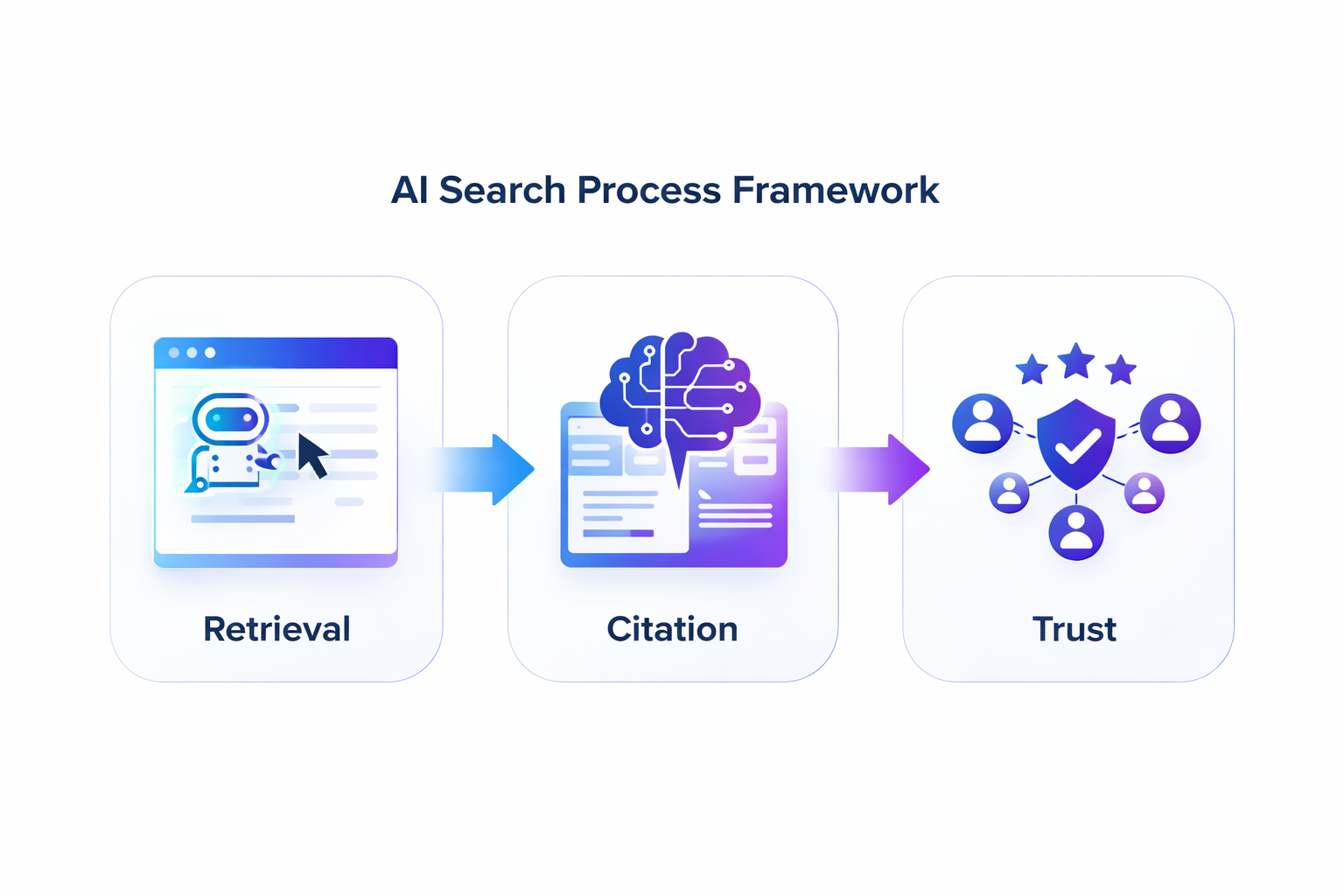
Optimizing for AI search visibility follows a structured process, similar to the traditional “crawl, index, rank” model used by search engines:
- Retrieval systems determine which pages qualify for initial consideration.
- The AI model chooses which sources are relevant enough to reference.
- Users decide which cited sources they trust and take action on.
Key considerations:
- Many of these strategies closely align with established SEO best practices. The fundamentals remain the same, even though the platform has changed.
- This framework does not claim to cover every effective tactic, but focuses on the most impactful ones.
- Debated elements such as schema markup and llms.txt are intentionally excluded from this approach.
Getting Content Into the AI Retrieval Candidate Pool
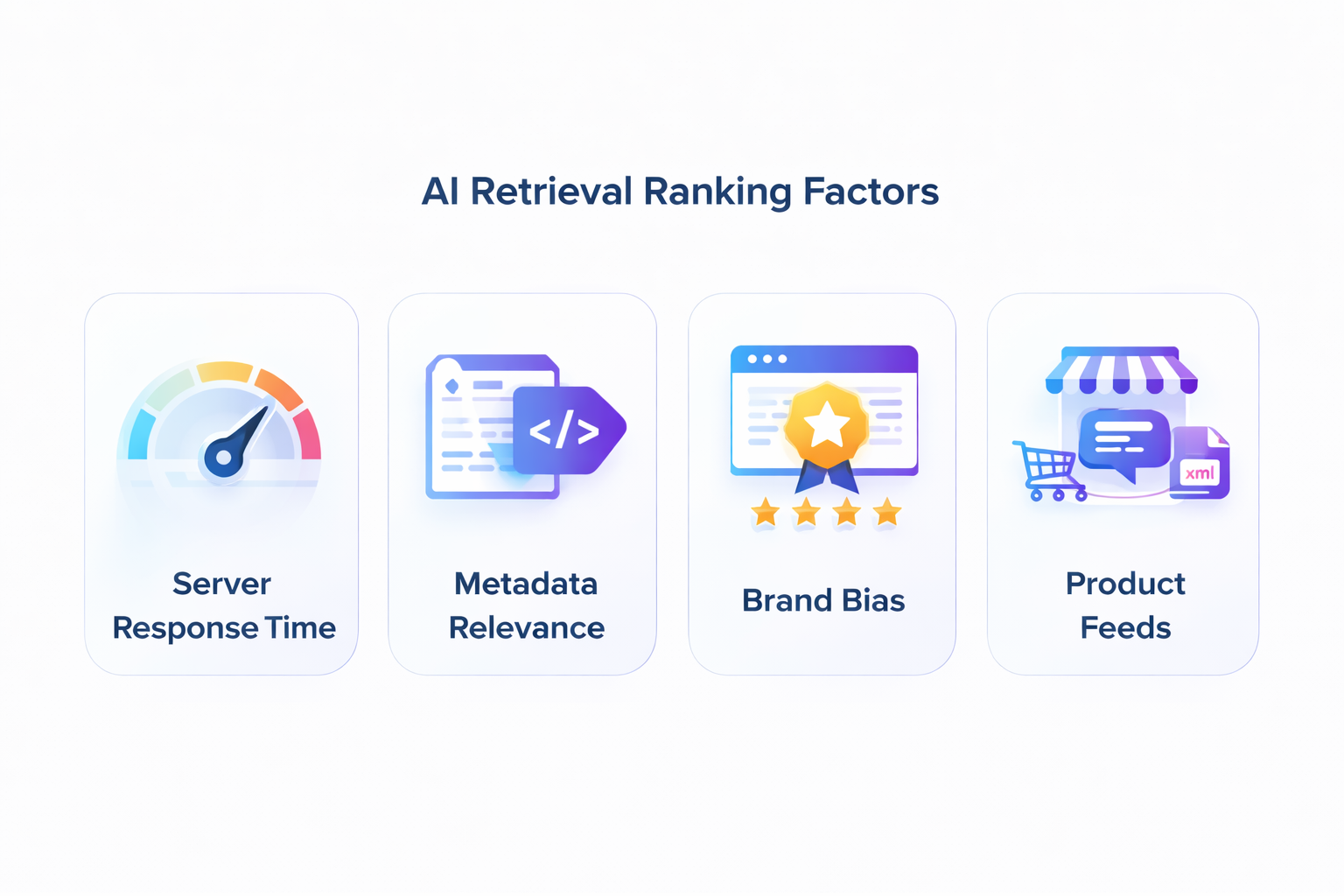
Before content can be considered by an AI model for grounding in live results, it must be easily crawlable, indexed, and retrievable within milliseconds during real-time search. Only content that meets these technical and contextual requirements enters the consideration set.
The main factors influencing this process include:
- Selection rate and primary bias
- Server response time
- Metadata relevance
- Product feed availability for ecommerce
Selection Rate and Primary Bias
What it means: Primary bias reflects the attributes an AI model already associates with a brand, while selection rate indicates how often a page is chosen from the retrieval pool.
Why it matters: LLMs inherit biases from training data and form brand-attribute connections such as affordability, reliability, or speed before live search even begins. These built-in perceptions affect whether content is cited, even when it qualifies technically.
Focus: Identify the attributes AI associates with a brand and reinforce them through consistent on-page signals and off-page authority building.
Server Response Time
What it means: The speed at which a server delivers its first byte of data after a crawler request, commonly measured as Time to First Byte (TTFB).
Why it matters: AI systems operate under strict latency limits during real-time retrieval. Slow servers risk missing the retrieval window entirely, reducing eligibility and triggering crawl rate restrictions.
Focus: Keep response times under 200 milliseconds. Faster sites are crawled more frequently, and AI crawlers have even tighter speed requirements than traditional search engines.
Metadata Relevance
What it means: The clarity and accuracy of title tags, meta descriptions, and URL structures used to signal page relevance.
Why it matters: LLMs rely on metadata to quickly understand topic alignment, context, and trust signals before selecting sources for AI-generated answers.
Focus: Align titles and descriptions with user intent and prompt language. Use clean, descriptive URLs and consider freshness indicators where relevant.
Product Feed Availability for Ecommerce
What it means: Structured product data submitted directly to AI platforms, including pricing, availability, and specifications.
Why it matters: Direct feeds allow AI systems to answer purchase-related queries with real-time accuracy, bypassing traditional retrieval limitations.
Focus: Provide complete, structured product feeds in supported formats and enable agent-based commerce protocols to support AI-driven shopping experiences.
How AI Models Select Sources for Citation
Recent research highlights a growing attribution gap in AI-generated search results. Studies show that even when models access relevant sources, citations are often missing or limited. A significant share of ChatGPT responses are produced without live web retrieval, Gemini rarely displays clickable citations, and platforms like Perplexity review multiple relevant pages but reference only a small subset.
AI models can only credit sources that appear within their active context window. Information learned during pre-training is typically uncited, while live retrieval enables attribution by attaching a source URL.
Content Structure
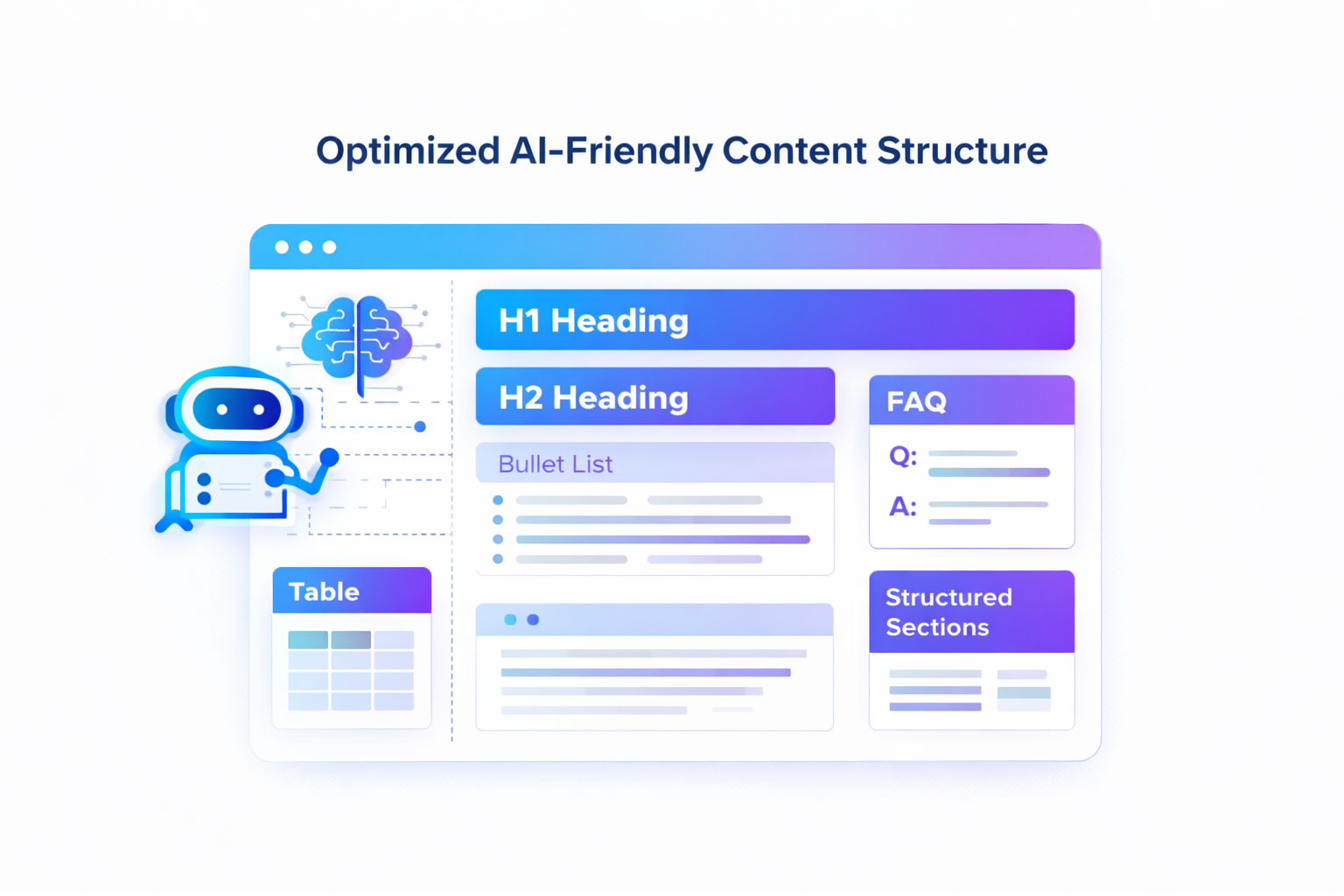
What it means: The use of semantic HTML, clear headings, tables, lists, and well-organized sections that improve machine readability.
Why it matters: LLMs extract specific passages rather than entire pages. Well-structured content is easier to parse, quote, and reuse. As AI prompts are longer and more complex than traditional keywords, pages that answer multi-part questions perform better.
Focus: Apply proper heading hierarchies, use tables for comparisons, lists for clarity, and increase factual depth to improve the chances of being cited.
FAQ Coverage
What it means: Dedicated question-and-answer sections written in natural, conversational language.
Why it matters: FAQs closely match how users interact with AI tools, using phrasing such as “how to,” “what is,” and “what’s the difference.” This alignment improves both relevance and citation potential.
Focus: Create FAQs based on real customer questions from support, sales, and community discussions. Keep them updated to reflect evolving user intent and prompt behaviour.
Content Freshness
What it means: How recently a page has been updated, based on visible timestamps and meaningful content revisions.
Why it matters: AI systems evaluate freshness signals to judge accuracy and relevance. Recently updated content is more likely to be treated as reliable, especially for time-sensitive queries.
Focus: Refresh key pages regularly, ideally within the last three months. While most cited pages are updated within a year, the strongest performance comes from content revised in the recent quarter.
Third-Party Mentions and External Authority
What it means: Brand references, reviews, and citations published on independent websites such as media outlets, review platforms, and industry publications.
Why it matters: As user intent moves closer to a buying decision, AI models place greater weight on external validation than on self-published claims. Independent mentions help confirm credibility, reinforce category relevance, and strengthen brand recognition within AI knowledge graphs.
Focus: Prioritize earning authoritative, context-rich mentions from trusted third-party sources and maintain accurate, complete profiles on relevant review platforms.
Organic Search Visibility
What it means: A page’s position in traditional search engine results for relevant topics.
Why it matters: Many AI systems rely on search engines for content retrieval. Strong organic rankings increase the likelihood of being included in the AI candidate set and referenced in generated answers.
Focus: Aim for consistent top-10 rankings across a broad range of related queries, including long-tail and question-based searches. Pages with wider keyword coverage are cited more often, though the strength of this relationship varies by AI platform.
User Trust Signals in AI Search
In AI search, users are presented with a single consolidated answer rather than multiple options. This makes trust a decisive factor. Building trust follows principles similar to improving click-through rates in traditional search, but the process is slower and more difficult to quantify. Brands that consistently demonstrate credibility, relevance, and accuracy are more likely to earn user confidence and action.
Demonstrated Expertise
What it means: Clear signals that prove subject-matter authority, including author bylines, professional credentials, certifications, and documented achievements.
Why it matters: AI-driven search presents users with a single, confident answer rather than multiple options. As a result, users look for stronger proof of expertise before trusting the information or taking action.
Focus: Prominently showcase author qualifications, industry certifications, awards, case study results, and third-party validations. Ensure all key claims are supported by credible evidence.
User-Generated Content and Community Presence
What it means: Brand visibility on community-led platforms such as Reddit, YouTube, and industry forums where real users share opinions and experiences.
Why it matters: Users often cross-check AI-generated answers against authentic human perspectives. When AI summaries appear, engagement with platforms like Reddit and YouTube increases significantly, as users seek social proof and real-world validation.
Focus: Actively build a positive and consistent presence in relevant online communities. Platforms such as Reddit and YouTube are among the most frequently referenced sources across leading AI models, making them critical for trust and visibility.
The Future of Search: From Multiple Results to One AI Answer
Search is evolving from information overload to intelligent synthesis. For years, users relied on ranked result pages to compare options. AI-driven search now delivers one consolidated answer, drawing insights from multiple sources and presenting them as a definitive response.
This shift introduces a new set of mechanics compared to early SEO models:
• Retrieval windows now define visibility instead of crawl budgets
• Selection rate has replaced PageRank as a key signal
• Third-party validation carries more weight than anchor text
While the objective remains unchanged earning visibility where users search the approach has evolved. Traditional SEO still provides the foundation, but AI search requires new content priorities:
• Coverage of conversational and intent-driven queries matters more than ranking for short head terms
• Independent, external validation outweighs self-published content
• Clear structure and clarity matter more than keyword repetition
Brands and marketers who understand these changes will be better positioned to succeed as AI-powered search continues to grow.
For professionals and students looking to stay ahead in this evolving landscape, learning modern SEO and AI search strategies has become essential. Enrolling in a digital marketing course in Kochi can help build practical skills in SEO, AI search optimization, content strategy, and performance marketing needed to succeed in the new era of search.


