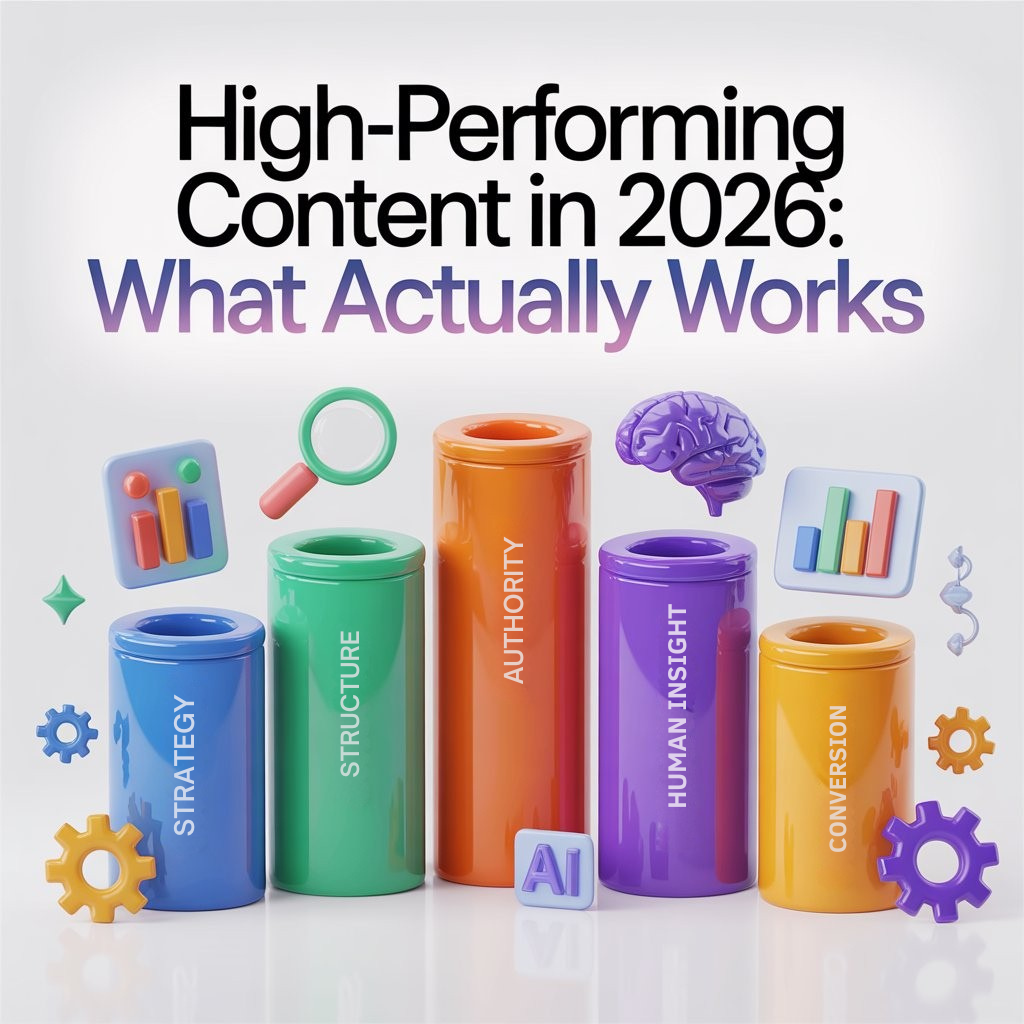
High-performing content in 2026 is not about volume or speed. It is strategic, experience-driven, structured for AI visibility, optimized for search intent, and built around human insight. Writers who combine SEO fundamentals with authority, clarity, and conversion focus will remain relevant and in demand.
Introduction
Artificial intelligence has reshaped how content is created, discovered, and evaluated. With the rise of large language models and AI-generated summaries, search behavior is evolving rapidly.
But one principle remains unchanged.
High-performing content in 2026 is defined by value, credibility, structure, and strategic intent not by how quickly it is produced.
As low-quality AI content floods the internet, meaningful differentiation has become easier for those who focus on depth, clarity, and experience-driven insight.
What High-Performing Content in 2026 Really Means
High-performing content in 2026 must:
- Solve a clearly defined user problem
- Demonstrate first-hand expertise
- Be structured for both humans and AI systems
- Support business goals beyond traffic
- Influence decision-making across the customer journey
Performance is no longer measured only by rankings or page views. It is measured by engagement quality, assisted conversions, authority signals, and AI visibility.
How Writers Can Stay Relevant in the AI Era
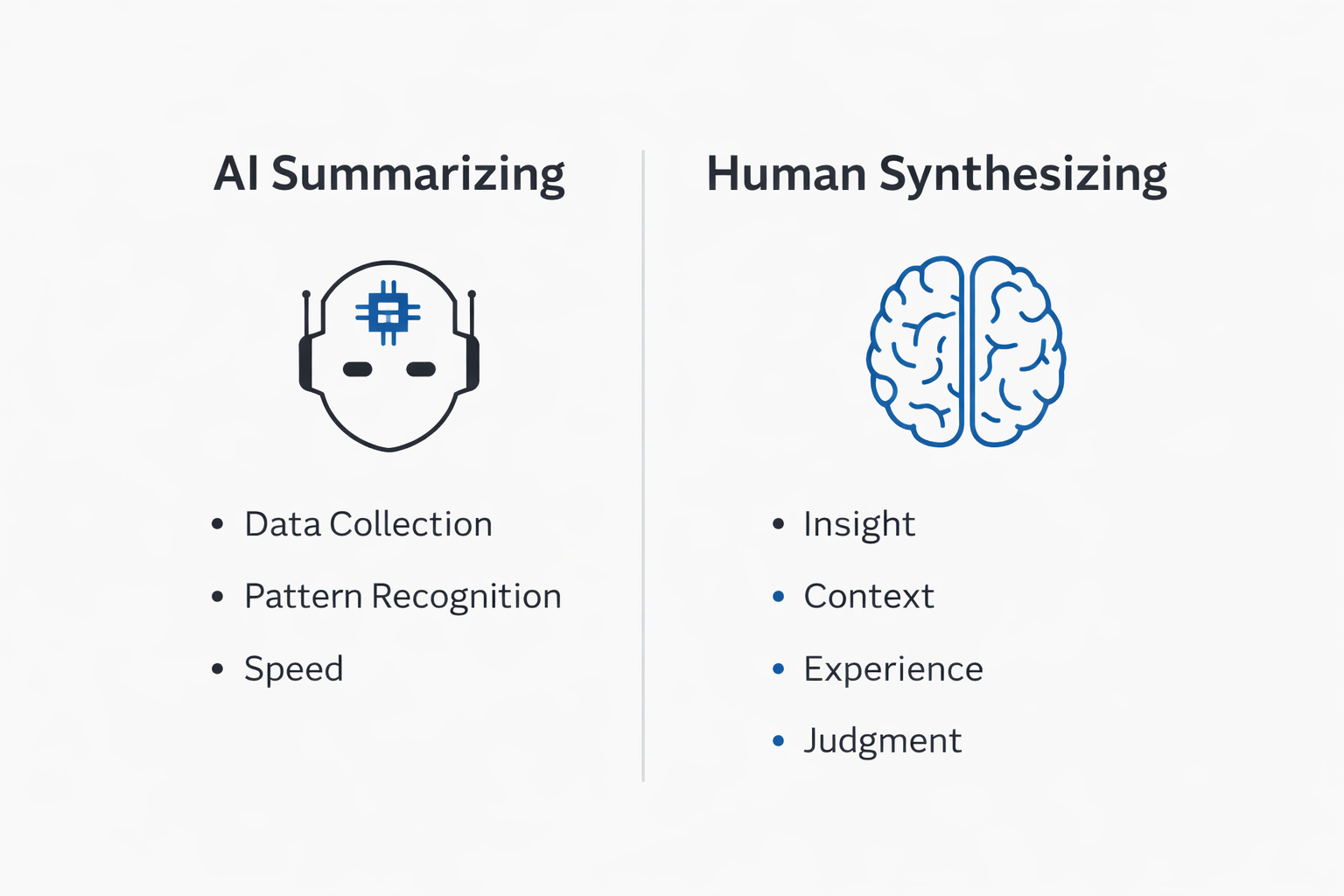
1. Move Beyond Summarizing to Synthesizing
AI can gather and reorganize information quickly. What it cannot do effectively is:
- Interpret nuance
- Apply lived experience
- Connect ideas strategically
- Make judgment-based recommendations
Writers who synthesize information instead of repeating it will remain indispensable.
In 2026, the value lies in perspective not paraphrasing.
2. Think Strategically, Not Tactically
High-performing content is guided by strategy.
Writers who understand:
- Audience psychology
- Search intent
- Brand messaging
- Funnel alignment
will outperform those focused only on production.
3. Lean Into Voice, Nuance, and Perspective
Authentic voice is one of the strongest differentiators in an AI-heavy ecosystem.
Generic content blends in.
Clear opinion, structured reasoning, and confident positioning stand out.
Storytelling, conversion-focused writing, and executive clarity are human strengths that automation cannot replicate effectively.
How to Structure Content for LLM and AI Visibility
AI-driven search engines extract, summarize, and reformat content. That means structure now plays a critical role.
Balance Machine Readability with Human Experience
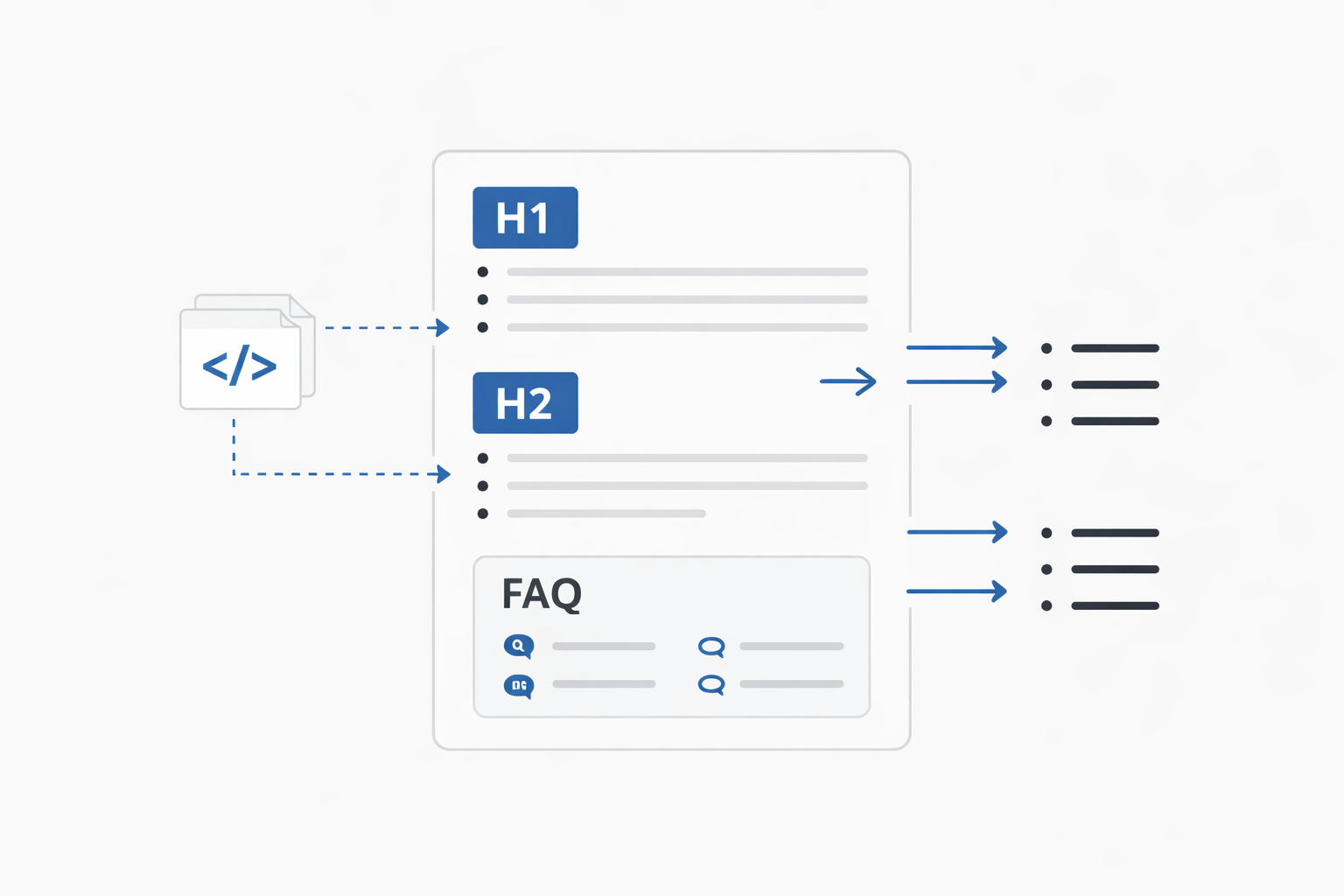
To make content AI-friendly in 2026:
- Use clear headings (H2, H3)
- Define concepts directly
- Maintain logical progression
- Include summary-style sections
- Add FAQ blocks
- Keep paragraphs concise
- Use intent-driven subheadings
However, structure should enhance clarity not flatten personality.
The most effective content satisfies both human readers and AI systems.
Publish Less, But Make Every Asset Stronger
High-performing teams are reducing output and increasing impact.
Instead of publishing ten average articles, they create:
- One comprehensive authority guide
- One research-backed insight piece
- One conversion-driven resource
Each asset is designed to rank, influence, and convert.
Influence per word matters more than word count.
SEO Fundamentals Still Matter in 2026
Despite the rise of AI search, traditional SEO best practices remain essential.
High-performing content still requires:
- Clear primary keyword targeting
- Strong internal linking
- Intent-driven headings
- Structured formatting
- Technical optimization
- Helpful answers to real queries
What has evolved is how content is evaluated.
Search engines now prioritize clarity, authority, and usefulness more aggressively than ever.
What Type of Content Performs Best in 2026?
1. Authority-Led Content
The strongest performers include:
- Original research
- Expert commentary
- Case studies
- Proprietary data
- First-hand experimentation
Generic summaries are increasingly ignored, Depth wins.
2. Educational Frameworks and Playbooks
Step-by-step guides, actionable frameworks, and decision-based content continue to perform strongly especially when they anticipate user objections and real-world scenarios.
3. Updated and Refreshed Assets
Updating existing content often delivers faster results than publishing new content.
Improvements such as:
- Refreshed statistics
- Improved headlines
- Better internal linking
- Enhanced structure
- Added FAQs
can significantly boost performance.
How Content Value Is Measured in 2026
Traffic alone is no longer the primary success metric.
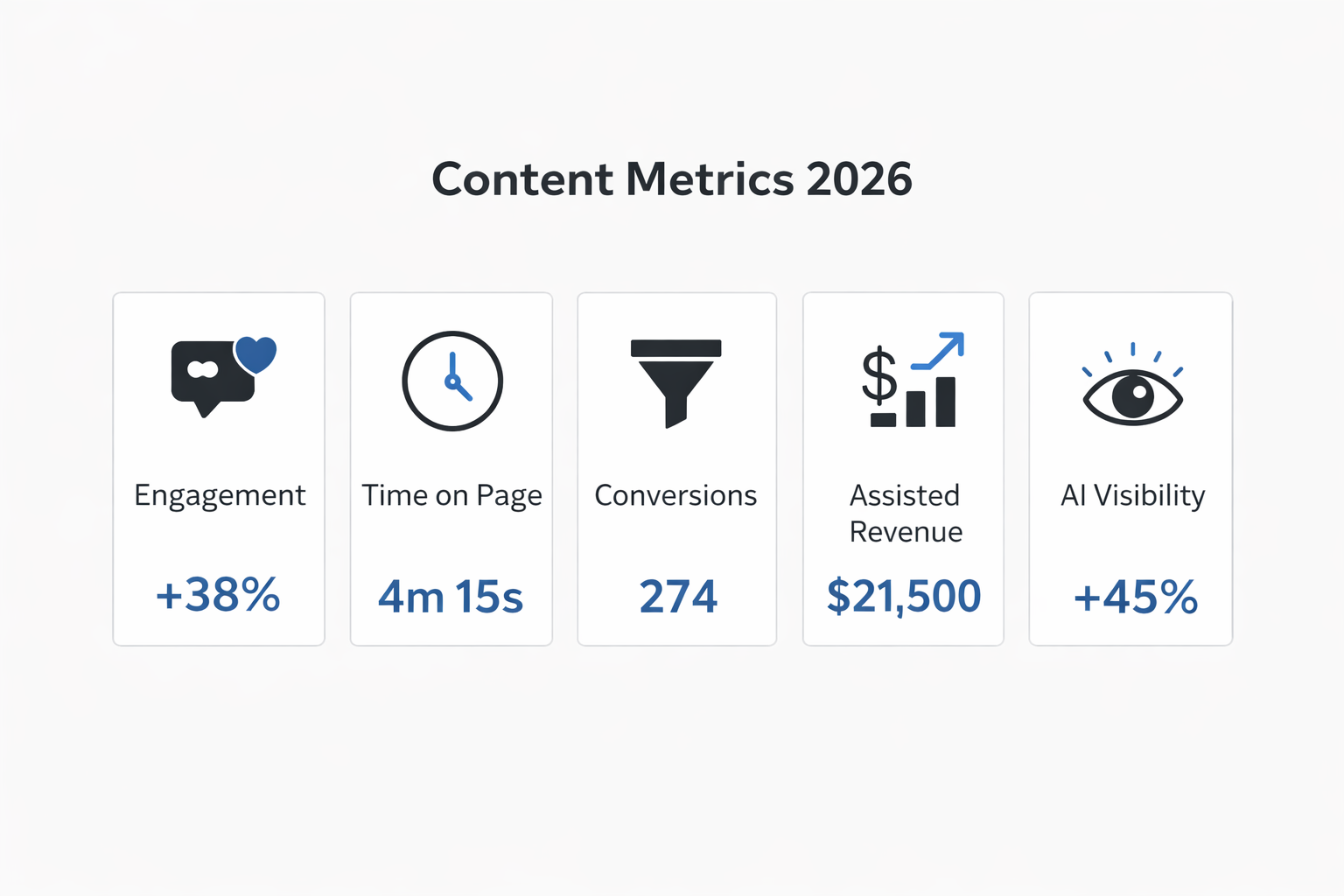
High-performing content is measured through:
- Engagement quality
- Time on page
- Lead relevance
- Assisted conversions
- Sales influence
- Brand authority signals
- AI summary inclusion
Vanity metrics are replaced by outcome-based metrics.
Rankings matter only if they drive qualified action.
The Core Traits of High-Performing Content in 2026
High-performing content in 2026 is:
- Experience-driven
- Strategically guided
- Clearly structured
- Human-led
- Insightful
- Conversion-aware
- Trust-building
It is not the fastest, loudest, or longest content that wins.
It is the most meaningful.
Frequently Asked Questions
What makes content high-performing in 2026?
High-performing content in 2026 combines strategic alignment, human insight, strong structure, SEO fundamentals, and measurable business impact.
Is SEO still relevant in 2026?
Yes. SEO fundamentals remain essential. However, content must also be optimized for AI-driven search experiences and large language model extraction.
How should writers adapt to AI tools?
Writers should use AI for research and structuring but retain control over synthesis, narrative clarity, and strategic positioning.
Does AI replace content writers?
AI automates repetition, not judgment. Writers who focus on strategy, authority, and human nuance remain highly valuable.
Final Takeaway
AI has transformed the way content is discovered, but it has not redefined what makes content meaningful. The real advantage now comes from thoughtful structure, clear strategy, depth of insight, and human judgment that machines cannot replicate. While LLMs surface what they can interpret, readers continue to gravitate toward what feels credible, relevant, and trustworthy. Content that performs well in this era is content that satisfies both.
For writers, marketers, and learners exploring the future of content through practice or even a digital marketing course in Kochi, the message is clear. Master the fundamentals, adapt intelligently, and lead with insight rather than volume.


