
The landscape of search is transforming dramatically. As artificial intelligence becomes the primary gateway for information discovery, enterprises face a critical challenge that many haven’t fully addressed duplicate content. What was once merely an SEO nuisance has evolved into a significant barrier to AI visibility and brand authority.
What Is Duplicate Content in AI Search?
Duplicate content in AI search refers to the same or very similar information appearing across multiple URLs, pages, or platforms, making it difficult for AI systems to identify the single most authoritative source. This can include website versions with tracking parameters, regional copies, HTTP vs HTTPS pages, or CMS-generated duplicates. When AI-powered search engines and assistants encounter these variations, they struggle to decide which page to trust, which reduces your chances of being accurately indexed, cited, and recommended in AI-generated answers.
Why AI Struggles With Duplicate Pages
When AI systems find several versions of the same page, they struggle to choose which one to trust and reference, often selecting an outdated URL, a link with messy tracking parameters or the wrong regional page instead of your preferred content.
The consequences go deeper than traditional rankings since AI builds its responses from search indexes, duplicate content creates confusion that flows through every answer it generates. When your content appears scattered across multiple pages, AI can’t confidently identify which source is most authoritative. This directly weakens your brand’s visibility in AI conversations. Instead of being recognized as the trusted expert in your field, your authority gets diluted, making it far less likely that AI assistants will mention or recommend you when users ask for information or advice.
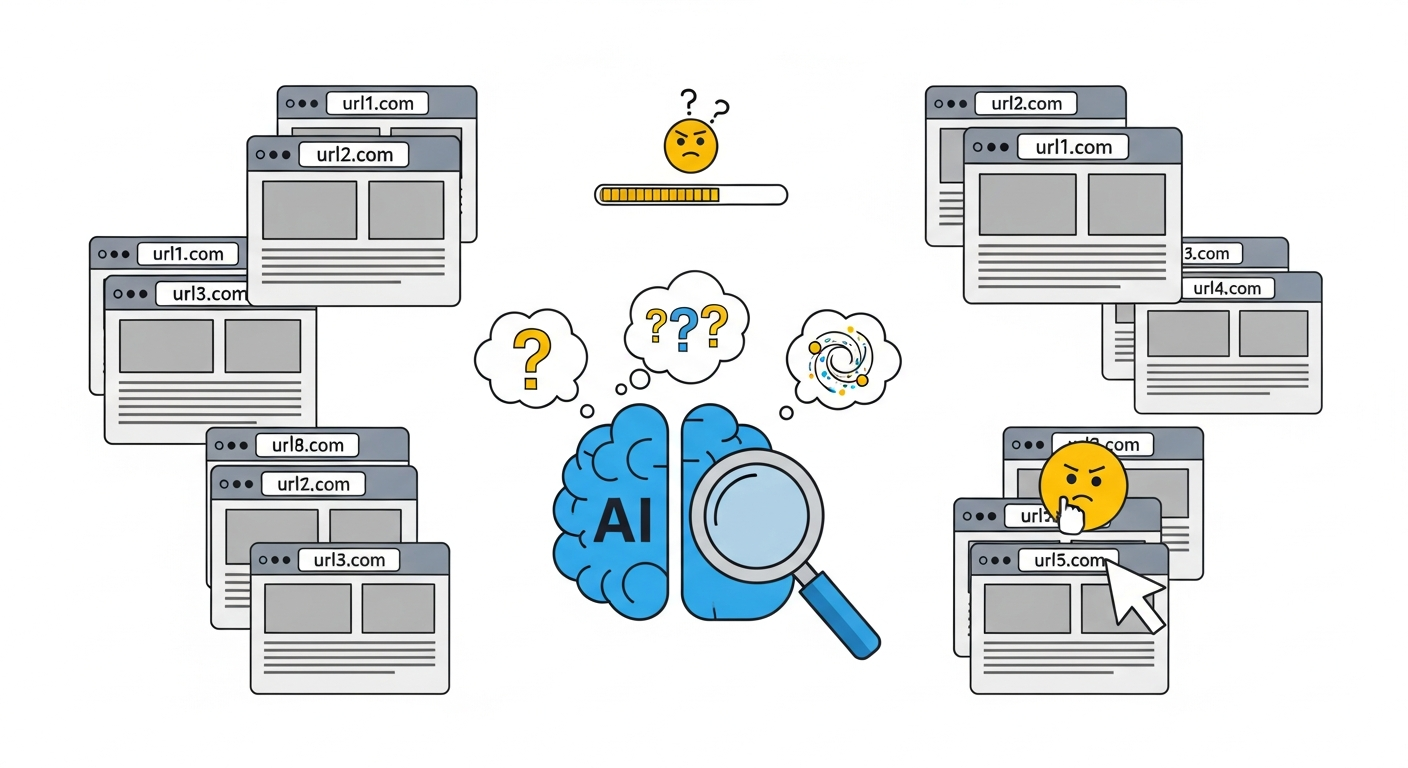
How Duplicate Content Confuses AI Assistants
AI systems don’t just index content they evaluate it for trustworthiness and authority. Duplicate content creates several problems that directly impact these evaluations:
Diluted Authority Signals
When identical or near-identical content exists across multiple URLs, the authority signals backlinks, social mentions and engagement metrics become fragmented. Instead of consolidating trust indicators around one definitive source, they scatter across duplicates. AI systems interpret this fragmentation as uncertainty about which source truly represents authoritative information.
Inconsistent Entity Recognition
Modern AI relies heavily on entity recognition to understand relationships between topics, brands and expertise. Duplicate content confuses entity mapping. When the same information appears in multiple locations with slight variations, AI systems may struggle to connect that content to your brand identity, reducing your visibility in entity-based searches.
Reduced Citation Probability
AI assistants prefer citing clear, singular authoritative sources. When faced with multiple versions of the same content, these systems often default to the version they encounter first or the one with marginally stronger signals which may not align with your strategic priorities. Worse, they might skip citing you entirely in favor of a competitor with a cleaner content architecture.
How Canonical URLs Affect AI Visibility
The technical infrastructure that made traditional SEO successful remains essential for AI visibility, but duplicates undermine these foundations in specific ways:
Crawl Budget Waste
AI agents and crawler bots operate with limited resources. When they encounter duplicate content, they waste valuable crawl budget processing redundant pages. This means less time spent on your unique, valuable content the material that actually deserves AI citations.
Machine Readability Challenges
AI systems rely on structured data, clear hierarchies and semantic markup to understand content. Duplicate pages often lack consistent implementation of these elements. One version might have proper schema markup while another doesn’t. This inconsistency makes it harder for AI to parse and trust your information.
Performance Degradation
AI agents increasingly access content in real-time during user conversations. They don’t pre-index everything; they fetch on demand. Duplicate content slows this process, creating uncertainty about which version to retrieve. Speed and clarity matter and duplicates compromise both.
How to Fix Duplicate Content for AI Search
High-quality, original content drives AI visibility. Duplicates work against this principle in fundamental ways:
Loss of Uniqueness
AI tools don’t cite content that merely repackages existing information they can generate that themselves. They seek unique insights, original research and distinctive perspectives. Duplicate content signals the opposite: redundancy rather than originality.
Weakened E-E-A-T Signals
Experience, expertise, authoritativeness and trustworthiness these signals that determine whether AI systems view you as citation-worthy. Duplicate content undermines each element:
- Experience: Redundant pages suggest a lack of fresh experience or perspective
- Expertise: True experts produce diverse, not duplicative, content
- Authoritativeness: Authoritative sources maintain clean, organized information architectures
- Trustworthiness: Duplicates raise questions about content management and intentionality
Reduced Cognitive Ease
The best content delivers high information value with minimal cognitive effort. Duplicate content does the opposite, it creates confusion, forces users and AI systems to evaluate multiple similar options and reduces confidence in any single source.
Multi-Platform Implications
As brands must optimize across multiple AI platforms, each with different algorithms and preferences, duplicate content multiplies problems:
Platform-Specific Confusion
Different AI systems may select different duplicate versions as “canonical.” One platform might cite your preferred URL while another references an outdated duplicate. This inconsistency damages brand messaging and undermines the coherent presence essential for AI marketing.
Citation Instability
Tracking brand citations across AI platforms becomes nearly impossible when duplicates exist. You can’t accurately measure AI visibility or citation authority when your content appears under multiple URLs. This measurement gap prevents strategic optimization.
Competitive Disadvantage
While you’re managing duplicate content issues, competitors with cleaner architectures gain ground. They appear more consistently, get cited more reliably and build a stronger AI presence. In the competition for AI conversation share, technical clarity is a decisive advantage.
Measurement Challenges Created by Duplicates
The shift from presence to perception in AI search requires new measurement approaches, but duplicates make accurate measurement impossible:
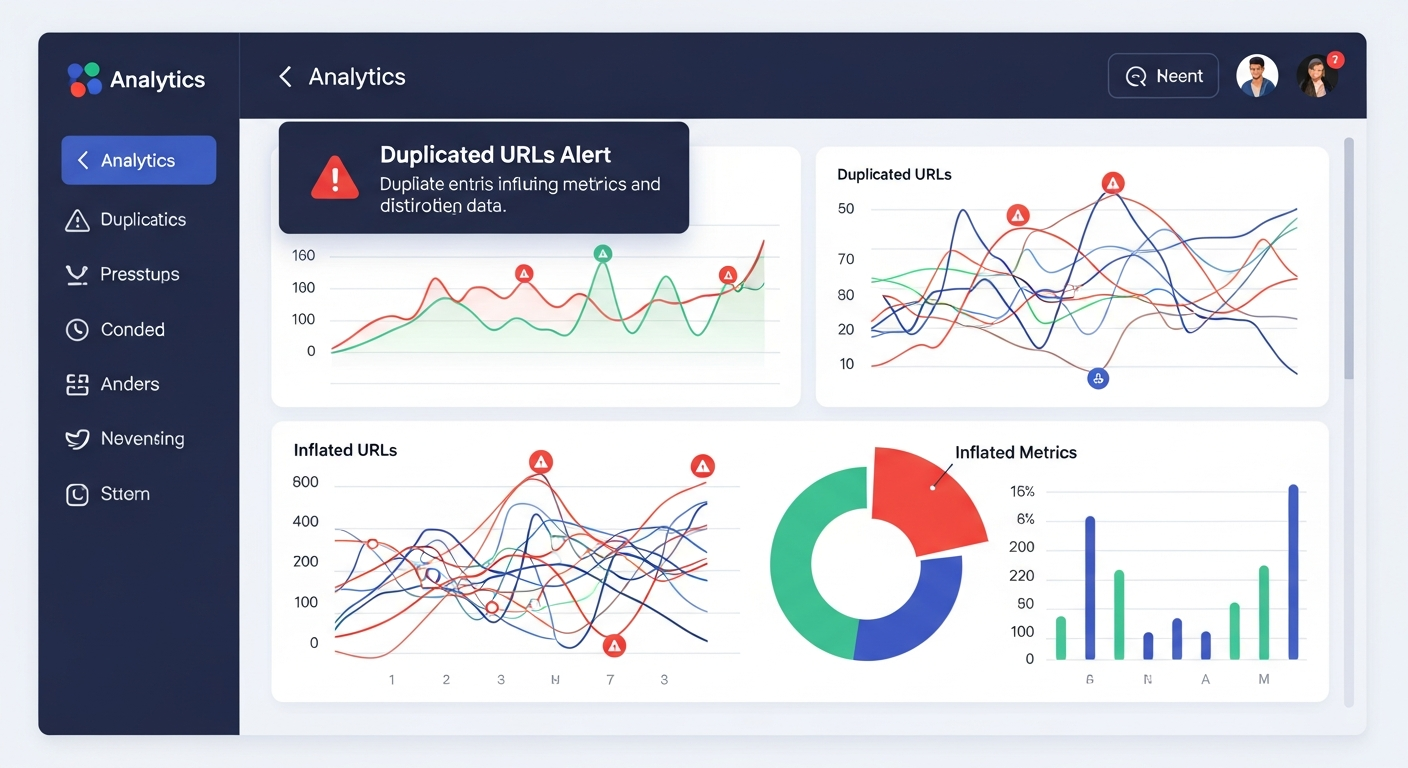
Fragmented Presence Metrics
When calculating what percentage of target queries surface your brand in AI responses, duplicates create false positives and artificial inflation. You might appear multiple times for the same query via different URLs, masking the reality of your true visibility.
Citation Authority Confusion
Determining how consistently you’re cited as the primary source becomes murky when citations point to different versions of the same content. This fragmentation prevents a clear understanding of your actual citation authority.
Incomplete Competitive Analysis
Assessing your share of AI conversation versus competitors requires clean data. Duplicates distort this analysis, making it difficult to understand your true market position in AI-generated answers.
AI SEO Best Practices for Enterprise Websites
Addressing duplicate content in the AI era requires coordinated action across multiple teams:
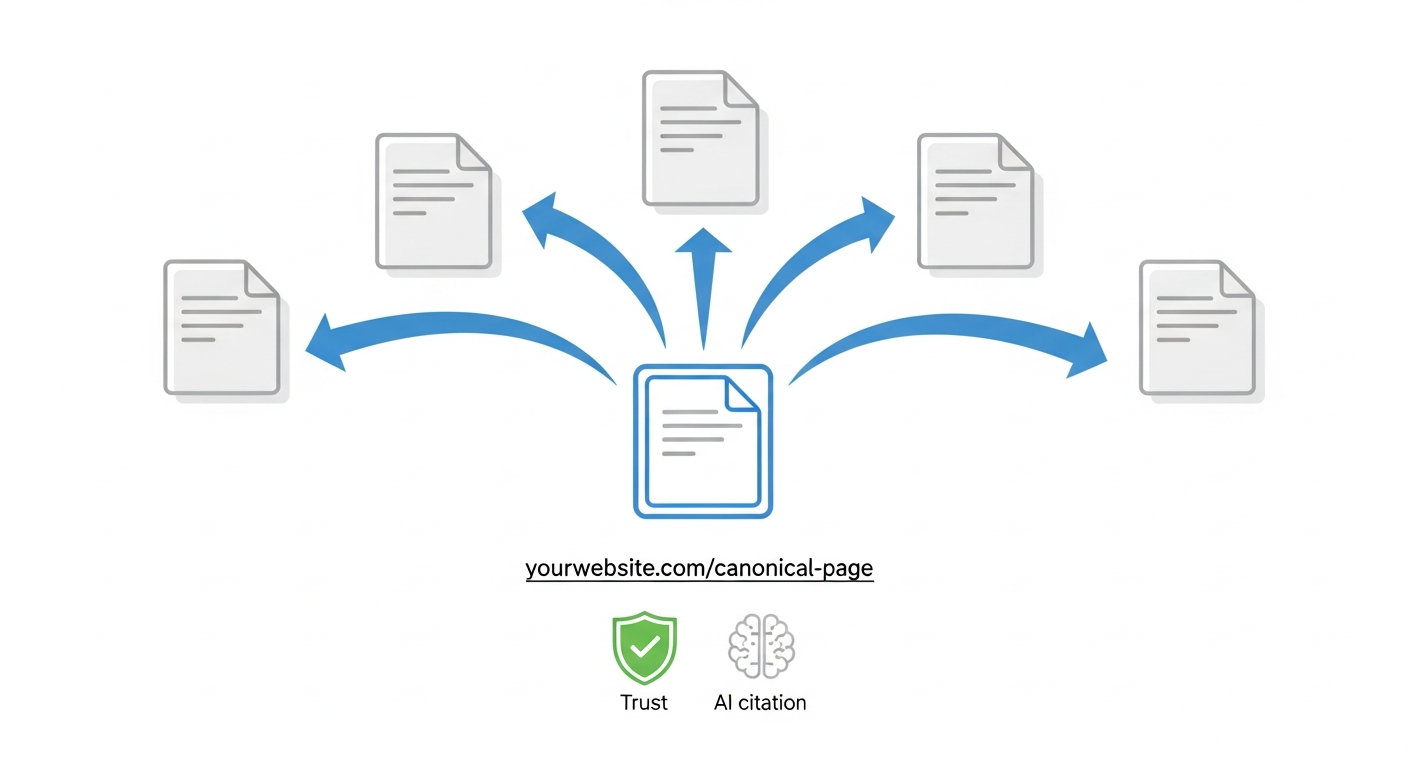
Technical Remediation
Implement canonical tags correctly across all duplicate instances. Use 301 redirects to consolidate authority signals. Ensure consistent structured data implementation on preferred pages. These technical foundations create the clarity AI systems need.
Content Consolidation
Audit existing content to identify duplicates and near-duplicates. Merge, redirect, or remove as appropriate. The goal is one authoritative resource per topic, the version you want AI systems to cite.
Information Architecture Redesign
Restructure sites to prevent future duplication. This means rethinking URL structures, parameter handling and content management workflows. Build systems that inherently favor content uniqueness.
Cross-Functional Alignment
Success requires coordination between SEO teams, content creators, technical developers and marketing strategists. Everyone must understand how duplicates undermine AI visibility and commit to preventing them.
Automation and Monitoring
At enterprise scale, manual duplicate management is unsustainable. Implement automated systems to detect emerging duplicates, validate canonical implementations and monitor AI citation patterns. Technology must enable the scale and speed this work demands.
Conclusion
Duplicate content is no longer just an SEO problem it’s now a critical threat to your brand’s visibility in the AI-driven search landscape. As conversational assistants and answer engines become the primary way people discover information, duplicate pages directly damage your brand authority, reduce the chances of being cited and put you at a competitive disadvantage. The companies that will succeed are those who act quickly to eliminate duplicates, invest in clean technical infrastructure and build unified content strategies focused on quality and uniqueness. The payoff is substantial: when you establish a clear, authoritative content structure, AI systems recognize you as a trusted source worth citing. Fix them now and you create a clear path for AI systems to discover, trust and confidently recommend your brand to users.


